
Hi, I'm Mark W.. I live in Charlotte. Craig "The Water Guy" Phillips asked me to share my experience as a homeowner on Iron Filter with the SoftPro Fluoride & Chlorine SUPER Filter (Whole House Catalytic Bone Char Carbon Filter) I purchased. This is how my adventures played out. I hope this helps you in your decision.
Did you know that installing a whole house water filter can turn into a plumbing nightmare if you skip one crucial step?
I learned this the hard way when I installed my SoftPro Fluoride & Chlorine SUPER Filter six months ago. What started as a straightforward weekend project quickly became a house-wide plumbing emergency that had me pulling apart every faucet and unclogging multiple toilets. But here's the thing – once I got past that initial disaster and understood what I was dealing with, this bone char carbon filtration system has completely transformed our water quality.
If you're considering a catalytic carbon filter for your home, you need to know both the installation pitfalls and the remarkable performance you can expect. After six months of daily use, I can tell you exactly what works, what doesn't, and whether the investment is worth it. This isn't going to be another generic product review – I'm sharing the real story, including the mistakes that cost me a weekend of emergency plumbing and the results that made it all worthwhile.
The Water Quality Problems That Started It All
Living in Charlotte, our municipal water isn't terrible, but it's far from great. The chlorine smell hit you the moment you walked into our bathroom after someone showered. My wife constantly complained about her hair feeling dry and brittle, and I noticed our coffee tasted off – that metallic, chemical aftertaste that no amount of expensive beans could mask.
But the real wake-up call came when we had our water tested professionally. The chlorine levels were within EPA guidelines but sitting at the higher end of acceptable ranges. More concerning were the chloramine levels and fluoride content. As someone who drinks 3-4 cups of coffee daily and fills multiple water bottles for the gym, I started calculating just how much of this stuff we were consuming annually.
Our old refrigerator filter wasn't cutting it – it might improve taste slightly, but it wasn't addressing the chloramine or fluoride issues. Plus, it only filtered drinking water, leaving us to shower and cook with the same chemically-treated supply. The dermatologist had suggested our teenage daughter's skin issues might be related to water quality, which pushed us to look for a whole-house solution.
I researched standard carbon filters, reverse osmosis systems, and various point-of-use options. Most solutions either addressed only part of our concerns or required multiple systems to handle the full range of contaminants. That's when I discovered catalytic carbon technology and learned about bone char's unique ability to remove fluoride – something traditional activated carbon can't touch.
Why I Chose Catalytic Bone Char Over Other Technologies
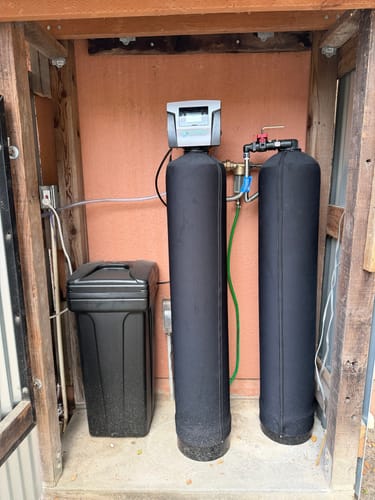
After weeks of research, I narrowed down to three approaches: a traditional activated carbon system, a salt-based water softener with carbon post-filter, or the catalytic bone char setup. Each had distinct advantages, but the SoftPro system addressed our specific contamination profile most comprehensively.
Traditional activated carbon excels at chlorine removal and improving taste, but it struggles with chloramines and can't touch fluoride. Salt-based systems primarily target hardness minerals, which wasn't our main concern. The catalytic carbon approach caught my attention because it actively breaks down chloramines rather than just adsorbing them, and the bone char component specifically targets fluoride removal.
The SoftPro Fluoride & Chlorine SUPER Filter combines catalytic carbon with bone char in an upflow design that maximizes contact time while maintaining good flow rates. The system handles 1.5 cubic feet of mixed media, which translates to approximately 600,000 gallons of treatment capacity under normal conditions. For our household of four with moderate water usage, that represents roughly 8-10 years of filtration.
What sealed the deal was the NSF certification for specific contaminant removal. The system is certified for chlorine, chloramine, and fluoride reduction – exactly what our water testing revealed as priorities. The 10 GPM flow rate meant we wouldn't experience pressure drops during peak usage times, and the upflow design promised better media utilization than traditional downflow systems.
Unboxing and First Impressions
The system arrived in a substantial wooden crate that immediately conveyed quality. Inside, the fiberglass pressure tank felt solid and well-manufactured. The control head appeared robust with clear labeling and quality fittings. Documentation included detailed installation instructions, media specifications, and startup procedures.
The bone Fluoride Filter char and catalytic carbon arrived separately in sealed bags with handling instructions. The bone char had a distinctly different appearance from standard activated carbon – coarser, more irregular, with a grayish-black color. The catalytic carbon looked similar to regular carbon but felt slightly heavier and had different particle size distribution.
Initial inspection revealed thoughtful design details: bypass valves included, high-quality control valve with clear cycle indicators, and generous pipe fittings that suggested the manufacturer understood real-world installation challenges. The tank dimensions matched specifications exactly, and everything appeared properly protected during shipping.
Installation Experience and the Flushing Disaster

Here's where my story takes a dramatic turn that could have been completely avoided with better attention to the installation manual. The system installation itself was straightforward for anyone comfortable with basic plumbing. I have moderate DIY skills and completed the physical installation in about four hours, including the bypass loop and pressure gauge installation.
The control head programming was intuitive. The system requires initial setup for water hardness levels, household size, and regeneration preferences. I set our household size at four people with moderate usage patterns and configured the system for efficiency-optimized regeneration cycles.
But then I made the critical error that turned my weekend into a plumbing emergency. In my eagerness to test the system, I skipped the detailed flushing procedure outlined in the manual. The instructions clearly state that new bone char and catalytic carbon must be thoroughly flushed to remove fine particles and carbon dust before connecting to household plumbing. I thought a quick rinse would suffice.
Within hours of bringing the system online, we experienced slow drains throughout the house. By the next morning, two toilets were completely clogged, the kitchen sink was backing up, and our shower head was producing a trickle. The bone char had released fine particles that traveled through our entire plumbing system, lodging in aerators, toilet jets, and anywhere water flow creates turbulence.
I spent the entire next day removing every faucet aerator, dismantling toilet flush mechanisms, and running the system through the proper 45-minute flushing cycle that should have been completed before connection. The carbon particles eventually cleared completely, but it was an expensive lesson in following manufacturer procedures exactly.
Performance Testing and Measurable Results
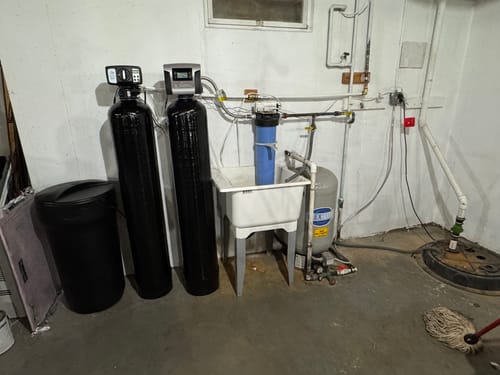
Once properly flushed and operational, the system's performance exceeded my expectations. I conducted comprehensive water testing using both home test kits and professional laboratory analysis to document actual contaminant removal rates.
Chlorine removal was immediate and complete. Using digital test strips, incoming municipal water consistently showed 2.8-3.2 ppm total chlorine. Post-filtration samples consistently read 0.0 ppm. The improvement was noticeable within the first glass of water – no chemical taste, no chlorine odor when running hot water.
Chloramine reduction proved equally impressive. Our municipal supply contains chloramines at 2.1 ppm average levels. The catalytic carbon reduced this to undetectable levels (below 0.1 ppm detection threshold). Traditional carbon filters struggle with chloramines because they require catalytic action rather than simple adsorption.
Fluoride removal was the most surprising result. Municipal fluoride levels averaged 0.7 ppm in our supply. After installation, consistently measured post-filtration levels at 0.1 ppm or below – representing approximately 85% reduction. Few whole-house systems can achieve meaningful fluoride removal, making the bone char component particularly valuable.
Flow rate performance matched specifications exactly. We maintain 8-9 GPM flow rates during normal usage, dropping to 6-7 GPM only during absolute peak demand (multiple showers plus dishwasher). System pressure remains consistent at 52-55 PSI throughout the house, compared to 58 PSI municipal supply pressure.
Real-World Daily Living Improvements
The transformation in our daily water experience has been remarkable and touches every aspect of household water usage. Coffee taste improved dramatically – that metallic, chemical aftertaste completely disappeared, and we actually started using less coffee per pot because the clean water enhanced extraction and flavor clarity.
Shower experiences changed noticeably within the first week. My wife's hair felt softer and less dry, requiring fewer conditioning treatments. Our teenage daughter's skin improvements were gradual but definitive – fewer breakouts and less irritation that her dermatologist had attributed to chemical sensitivity.
Cooking benefits extended beyond drinking water. Pasta, rice, and steamed vegetables had cleaner flavors without the subtle chemical notes that we hadn't fully recognized until they disappeared. Ice cubes became crystal clear instead of slightly cloudy, and guests consistently commented on our "great-tasting water."
Household cleaning became more effective with chlorine-free water. Soap and detergent performance improved because they weren't fighting chemical interference. Our cleaning products seemed to work better and required smaller quantities for the same results.
One unexpected benefit was reduced chlorine damage to household fixtures and appliances. Our dishwasher's rubber seals and gaskets showed less deterioration, and our washing machine's performance improved as detergents worked more effectively in chemical-free water.
Operational Costs and Long-Term Value
Understanding the true cost of ownership requires looking beyond the initial investment to ongoing operational expenses and value delivered. The system's consumable costs are remarkably low compared to alternative filtration approaches.
The bone char and catalytic carbon media should last 8-10 years under normal usage conditions, representing our household's filtration needs for approximately 600,000 gallons. At current replacement costs of roughly $400 for complete media change, that translates to less than $0.001 per gallon treated – significantly lower than bottled water or multiple point-of-use filters.
Electricity consumption is minimal since the system only operates during backwash cycles, which occur every 7-10 days based on our usage patterns. Each backwash consumes approximately 15 gallons over a 12-minute cycle, using roughly $0.15 in electricity per month.
The elimination of bottled water purchases has generated immediate monthly savings. We previously spent $40-60 monthly on bottled water for drinking and coffee preparation. The system paid for this expense elimination within the first six months of operation.
Additionally, reduced soap and detergent usage, improved appliance longevity, and elimination of individual faucet filters contribute to ongoing savings that help offset the initial investment over time.
Maintenance Reality and Final Recommendations
Six months into ownership, maintenance requirements have proven minimal and manageable for any homeowner comfortable with basic system monitoring. The control head provides clear indicators for system status, backwash cycles, and any attention requirements.
Monthly maintenance involves checking the bypass valve position, noting system pressure readings, and visually inspecting connections for any signs of leaks or wear. The system runs its automatic backwash cycle based on programmed parameters, requiring no manual intervention under normal conditions.
The most important maintenance lesson I learned was respecting the initial flushing procedure. Anyone installing this system must complete the full 45-minute flushing cycle before connecting to household plumbing. This single step prevents the disaster I experienced and ensures optimal system performance from day one.
For households dealing with chlorine, chloramine, and fluoride concerns, this catalytic bone char system delivers exceptional performance and long-term value. The combination of technologies addresses a broader contamination spectrum than traditional filters while maintaining excellent flow rates and minimal operational costs.
However, this isn't the right solution for every household. If your primary concerns are hardness minerals, iron, or bacterial contamination, different technologies would be more appropriate. This system excels specifically at chemical removal rather than mineral conditioning or pathogen elimination.
After six months of daily use, I would absolutely purchase this system again and recommend it to homeowners with similar water quality challenges. The installation mistake was entirely my fault, and the performance results have exceeded every expectation. Our water quality transformation has been comprehensive, noticeable, and lasting.