
Hi, I'm Terry O.. I live in California. Craig "The Water Guy" Phillips asked me to share my experience as a homeowner on Iron Filter with the SoftPro Iron Filter - Iron Master AIO - Best Iron Filter for Well Water [Air Injected Water Filter whole house iron treatment options / Katalox] I purchased. This is how my adventures played out. I hope this helps you in your decision.
Let me start by saying this: dealing with iron-laden well water was slowly driving me crazy. Every morning, I'd walk into my bathroom to find orange stains creeping up the toilet bowl, rusty streaks down the shower walls, and that metallic taste in my coffee that no amount of sugar could mask. After six months of battling these issues with various temporary fixes, I finally decided to invest in a proper iron filtration system. The SoftPro Iron Master AIO promised to solve my problems, but frankly, I was skeptical after being disappointed by other "solutions" before.
The Iron Problem That Was Ruining My Home
Living on well water in California's Central Valley, I thought the occasional metallic taste was just part of rural life. Boy, was I wrong about that assumption.
The problems started subtly. First, I noticed my white laundry developing a dingy, yellowish tint that no amount of bleach could eliminate. Then came the stains – orange and brown streaks that appeared overnight on every surface water touched. My beautiful porcelain fixtures looked like they belonged in an abandoned house, not a well-maintained home.
But the real wake-up call came when my appliance repair technician explained why my dishwasher was failing after just three years. "See this buildup here?" he said, pointing to rusty deposits clogging the spray arms. "This is iron precipitation. It's basically turning your water into liquid sandpaper for your appliances."
Did you know that iron concentrations above 0.3 parts per million can cause significant staining and taste issues?
My well water tested at 4.2 PPM – more than fourteen times the recommended level. The iron exists in two forms: ferrous iron (dissolved and invisible) and ferric iron (oxidized and visible as those rusty flakes). My water contained both, creating a perfect storm of problems.
The health implications concerned me too. While iron itself isn't toxic, the metallic taste made drinking water unpleasant, leading my family to consume more bottled water and sugary drinks. The iron was also feeding bacteria in my plumbing system, creating that swampy smell that occasionally wafted from my faucets.
Financially, the damage was mounting. Beyond the ruined appliances, I was spending $40 monthly on bottled water, replacing stained clothing and linens, and using expensive cleaning products that barely made a dent in the staining. A plumber estimated $1,200 in damage to my water heater's anode rod and heating elements – all caused by iron buildup.
My Research Journey Into Iron Filtration Solutions
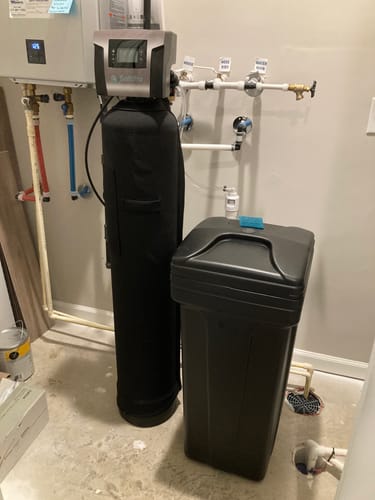
Determined to solve this problem permanently, I dove deep into research. What I discovered surprised me about the complexity of iron removal.
Iron filtration isn't a one-size-fits-all solution. The approach depends on your water's specific characteristics: iron concentration, pH levels, presence of hydrogen sulfide, bacterial iron, and whether you're dealing with ferrous or ferric iron. My water analysis revealed I had primarily ferrous iron with some organic iron complexes – a challenging combination.
I considered several technologies:
Water softeners can handle low levels of ferrous iron (under 3 PPM) but struggle with higher concentrations and don't address ferric iron effectively. Plus, they add sodium to your water and require ongoing salt purchases.
Sediment filters only capture visible ferric iron particles but can't touch dissolved ferrous iron. They're essentially band-aids for iron problems.
Chlorination systems oxidize ferrous iron to ferric, then filter it out. However, they introduce chlorine into your water supply and require careful chemical handling.
Air injection systems appealed to me because they use oxygen instead of chemicals to oxidize iron. The process mimics natural oxidation but speeds it up dramatically. When pressurized air mixes with iron-laden water, dissolved ferrous iron converts to ferric iron particles that can be filtered out.
The SoftPro Iron Master caught my attention because it combines air injection with Katalox Light filtration media. Katalox Light acts as both an oxidizing agent and a filter medium. This dual action meant one system could handle the oxidation and filtration processes, potentially solving my complex iron problems with a single unit.
Sizing was crucial. With a household of four and peak demand during morning routines, I needed at least 7 GPM flow rate to avoid pressure drops. The Iron Master's 1.5 cubic foot Katalox Light bed and 10 GPM service flow rate seemed adequate for our needs.
First Delivery Disaster and Replacement Experience
My excitement about solving our iron problems quickly turned to frustration when the first unit arrived. The shipping box looked like it had been used as a soccer ball.
Removing the packaging revealed a hairline crack running down one side of the fiberglass tank. The crack wasn't immediately obvious – I only noticed it when running my hand along the surface during inspection. Should I have accepted a potentially compromised tank just to avoid the hassle of returns?
Absolutely not, and I'm glad I trusted my instincts.
SoftPro's customer service handled the replacement professionally. After sending photos of the damage, they immediately shipped a replacement unit via a different carrier with enhanced packaging. The second unit arrived in perfect condition within five business days.
The replacement tank showed the build quality I expected: smooth fiberglass construction, properly seated fittings, and control valve components that moved smoothly without binding. The digital control head displayed clearly, and all programming buttons responded crisply.
This experience taught me the importance of thorough inspection before installation. Pressure tanks operate under significant stress, and any structural weakness could lead to catastrophic failure. The few days' delay was minor compared to the potential disaster of installing a compromised tank.
Installation Process and Initial Setup Challenges

Installing the Iron Master required more planning than I initially anticipated. This isn't a simple filter cartridge replacement – it's a whole-house system integration that demands careful attention to plumbing connections, electrical requirements, and space considerations.
Location selection proved critical. The unit measures 54 inches tall and 13 inches in diameter, requiring adequate clearance for maintenance access. I positioned it in my utility room with 18 inches of clearance on all sides, ensuring easy access to the control valve and allowing room for the air injection assembly.
The plumbing connections demanded precision. The system requires incoming water connection, treated water outlet, drain line, and bypass valve installation. I used 1-inch connections to maintain optimal flow rates, though 3/4-inch connections are acceptable for smaller households.
The air injection system was the most complex component. It requires a separate air pump that draws ambient air into the system, mixing it with incoming water in the oxidation chamber. The air pump connects via 1/4-inch tubing to the control valve, creating the pressurized air pocket necessary for iron oxidation.
Electrical connections were straightforward: standard 110V outlet for the control valve and air pump. However, I installed a dedicated GFCI outlet to ensure safety in the utility room environment.
The initial startup sequence took about 30 minutes. First, I slowly filled the tank to avoid disturbing the Katalox Light media bed. Then came programming the control valve for my specific water conditions: iron concentration, hardness levels, and household water usage patterns.
The system performed its first backwash cycle automatically, running for about 25 minutes. Watching rusty water pour down the drain during this initial cycle was both alarming and encouraging – alarming because it showed how contaminated our water really was, encouraging because the system was clearly capturing iron.
Real-World Performance and Water Quality Results
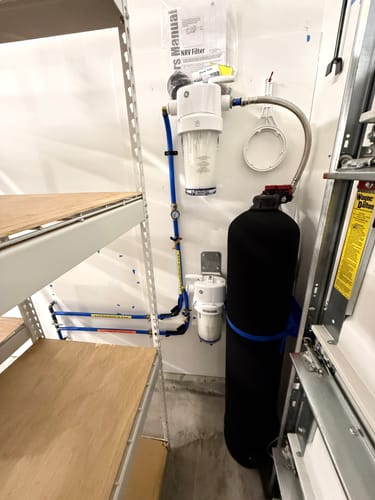
The transformation didn't happen overnight, but the results were undeniable. Within 48 hours of installation, I could taste the difference. That metallic flavor that had haunted my morning coffee completely disappeared.
I tested the water quality using both digital TDS meters and iron test strips to track performance objectively. Before installation: 4.2 PPM iron, 340 PPM total dissolved solids. After one week of operation: 0.1 PPM iron, 285 PPM TDS. The system was removing over 97% of the iron while leaving beneficial minerals intact.
The visual improvements were dramatic. New staining stopped completely. Those orange streaks that appeared daily on my shower walls became a thing of the past. My white porcelain fixtures stayed white, and my stainless steel sinks maintained their shine without constant scrubbing.
Laundry results exceeded my expectations. Colors stayed vibrant, whites remained bright, and that dingy yellow tint disappeared from our clothing. I noticed I was using significantly less detergent because soap worked more effectively in iron-free water.
The air injection system operates quietly – much quieter than I expected. During regeneration cycles, there's a gentle whooshing sound as air and water mix, but it's barely noticeable from adjoining rooms. The backwash cycles occur automatically based on water usage, typically every 3-4 days in our household.
Flow rate remained excellent throughout our home. Even during peak usage – simultaneous showers and dishwasher operation – water pressure stayed strong at all fixtures. The 10 GPM service flow rate proved adequate for our family's needs.
One unexpected benefit: the elimination of iron-related bacteria. That occasional swampy smell from our faucets disappeared as the system removed the iron that bacteria feed on. Our water now smells completely neutral.
Daily Living Impact and Household Benefits
Six months later, the Iron Master has transformed our relationship with water. My family drinks tap water again – something we hadn't done in over two years. We've eliminated bottled water purchases, saving approximately $35 monthly while reducing plastic waste.
Cleaning became dramatically easier. I used to spend 20 minutes weekly scrubbing iron stains from toilets, sinks, and shower surfaces. Now, a quick wipe with standard bathroom cleaner keeps everything spotless. My cleaning supply costs dropped by about 60% because I no longer need specialized rust removers and heavy-duty cleaners.
My appliances are performing better too. The dishwasher produces genuinely clean dishes without spots or film. My coffee maker hasn't required descaling in four months – previously a monthly necessity. The water heater operates more efficiently without iron buildup coating the heating elements.
Guests notice the difference immediately. "Your water tastes so clean!" has become a common comment from visitors. Several neighbors have asked about our system after noticing the improved water quality during visits.
Personal care improvements surprised me. My hair feels softer and more manageable without iron coating each strand. My skin doesn't feel as dry after showers, and I use less moisturizer than before. These weren't changes I expected, but they're certainly welcome.
The system's reliability has been impressive. Zero service calls, zero emergency repairs, zero unexpected shutdowns. It operates automatically, performing backwash cycles based on actual water usage rather than arbitrary time schedules.
Operational Costs and Maintenance Reality
Understanding the true cost of ownership was crucial for my decision-making process. Beyond the initial investment, I needed to know what ongoing expenses to expect.
The Iron Master operates without consumable chemicals, salt, or regular filter replacements. This was a major advantage over other iron removal methods. No monthly salt purchases, no chlorine handling, no filter cartridge subscriptions. The Katalox Light media bed should last 8-10 years under normal conditions.
Electricity consumption is minimal. The control valve and air pump combined draw about 45 watts during operation – roughly equivalent to a ceiling fan. With intermittent operation cycles, monthly electricity costs average $3-4.
Water usage for backwash cycles averages 150-200 gallons per regeneration. In our household, this occurs every 3-4 days, adding approximately 1,500 gallons monthly to our water bill. At our local rates ($0.003 per gallon), this adds about $4.50 monthly to water costs.
Maintenance requirements are straightforward. I check the air pump quarterly to ensure proper operation and inspect connections for any leaks. The control valve requires no regular maintenance beyond occasional cleaning of the display screen.
Annual operating costs total approximately $90-100, including electricity, water, and minimal maintenance. Compare this to our previous costs: $40 monthly for bottled water, $25 for specialized cleaning products, and frequent appliance repairs. The Iron Master actually saves money while providing superior results.
I did purchase a bypass valve kit for $45, allowing me to route water around the system if maintenance becomes necessary. This wasn't included but proved valuable for peace of mind.
Honest Assessment: What Could Be Better
No system is perfect, and the Iron Master has a few limitations worth discussing honestly. Understanding these drawbacks helped me set realistic expectations and might influence your decision.
The footprint is substantial. At 54 inches tall and 13 inches wide, this isn't suitable for cramped spaces. I have adequate utility room space, but apartment dwellers or homes with limited mechanical room space might struggle with placement.
Installation complexity exceeds typical homeowner DIY comfort levels. While technically possible, the plumbing, electrical, and programming requirements strongly favor professional installation. I'm comfortable with basic plumbing but hired a professional for the electrical connections and initial programming.
The air injection system requires periodic attention. Every few months, I hear slight changes in the air pump operation that indicate it's working harder. This isn't necessarily problematic, but it requires awareness and occasional maintenance checks.
Initial water waste during regeneration cycles was concerning. The first few backwash cycles used more water than expected – nearly 250 gallons each. This decreased to normal levels (150-200 gallons) after the media bed settled, but the initial consumption was higher than anticipated.
The control valve programming, while comprehensive, isn't intuitive. Adjusting regeneration frequency or modifying backwash duration requires consulting the manual each time. More user-friendly controls would improve the experience significantly.
Cost considerations matter too. The Iron Master represents a significant upfront investment compared to simpler filtration solutions. Households with minimal iron problems might find less expensive alternatives adequate for their needs.