
Hi, I'm Stephen A.. I live in New York. Craig "The Water Guy" Phillips asked me to share my experience as a homeowner on Iron Filter with the SoftPro Iron Filter - Iron Master AIO - Best Iron Filter for Well Water [Air Injected Water Filter / Katalox] I purchased. This is how my adventures played out. I hope this helps you in your decision.
Did you know that over 15 million American households rely on well water, and nearly 40% of them struggle with iron contamination?
I never thought I'd become an expert on iron filters, but here I am, six months into ownership of the SoftPro Iron Master, sharing every detail of my journey from rusty, stained water to crystal-clear results. When I first turned on my kitchen faucet after installation and watched clean, odor-free water flow out, I honestly couldn't believe the transformation was real.
The difference in water quality has been best whole house filters for iron water nothing short of remarkable. What started as a desperate attempt to solve our family's well water nightmare has turned into one of the best home investments I've ever made. Let me walk you through exactly what happened, the good and the challenging, so you can make an informed decision for your own home.
The Iron Water Problem That Drove Me to Find a Solution
Living with iron-contaminated well water was slowly destroying our quality of life, and I didn't fully realize it until the problem became unbearable. Every morning, I'd turn on the bathroom faucet to brush my teeth, and that familiar metallic smell would hit me immediately. The water had this distinct reddish-brown tint that made everything look dirty, no matter how much we cleaned.
Our white porcelain fixtures had developed permanent orange stains that no amount of bleach could remove. I'd scrub the toilet bowl weekly with iron-specific cleaners, spending 30-45 minutes each time, only to see the stains return within days. The shower walls looked like they hadn't been cleaned in months, despite my wife's diligent cleaning routine every week.
But the real frustration came from the laundry situation. Our clothes, especially anything white or light-colored, would come out of the washing machine looking dingy and yellow-tinged. I calculated that we were spending an extra $40 monthly on specialized detergents and iron-removing additives, plus the cost of replacing clothes that became permanently stained. Over the course of a year, this added up to nearly $500 in additional expenses.
The iron levels in our well water tested at 4.2 parts per million (ppm), which is more than four times the EPA's secondary standard of 0.3 ppm. This explained why our previous water softener couldn't handle the load - it was designed for hardness minerals like calcium and magnesium, not iron oxidation and removal.
I tried several temporary solutions before committing to a proper iron filter system. We installed sediment pre-filters that needed replacement every 3-4 weeks at $15 each. I experimented with liquid iron removers added to our water softener, but these only provided minimal improvement and required constant monitoring. The breaking point came when our dishwasher started leaving orange spots on all our glassware, and I realized the iron was actually damaging our appliances' internal components.
Research Journey: Understanding Iron Filtration Technology
Once I committed to solving this problem permanently, I dove deep into understanding how iron contamination works and what technologies actually remove it effectively. Iron in well water exists in two primary forms: ferrous (dissolved) and ferric (oxidized). Our water testing showed mostly ferrous iron, which is colorless and odorless until it contacts oxygen and oxidizes into the visible, problematic ferric form.
I learned that traditional water softeners can handle small amounts of ferrous iron - typically up to 1-2 ppm - but anything beyond that requires specialized iron filtration technology. The three main approaches I researched were chemical oxidation systems, air injection systems, and catalytic filtration media.
Chemical oxidation systems use chlorine or other oxidizing agents to convert ferrous iron to ferric, then filter out the particles. While effective, I was concerned about introducing chemicals into our drinking water and the ongoing chemical costs. Air injection systems work by introducing oxygen to oxidize the iron naturally, then filtering out the resulting particles through specialized media.
The Iron Master uses Katalox media, which combines air injection with catalytic iron removal. What made this approach appealing was its chemical-free operation and the media's ability to handle both iron and hydrogen sulfide simultaneously.
I spent considerable time researching flow rates and capacity requirements. Our household of four people uses approximately 300-400 gallons per day, with peak demand periods during morning and evening routines. The Iron Master's 2 cubic foot Katalox media bed provides a 10 GPM flow rate, which handles our simultaneous shower and dishwasher usage without pressure drops.
Certification standards became crucial in my decision-making process. I specifically looked for NSF/ANSI 61 certification for drinking water system components and WQA Gold Seal validation. The Iron Master meets both standards, providing confidence in its safety and performance claims.
Unboxing and First Impressions: Quality Assessment
The Iron Master arrived via freight delivery in a wooden crate, which immediately suggested serious commercial-grade equipment rather than a consumer appliance. The packaging was impressive - each component was individually wrapped and secured with custom foam inserts that prevented any shipping damage.
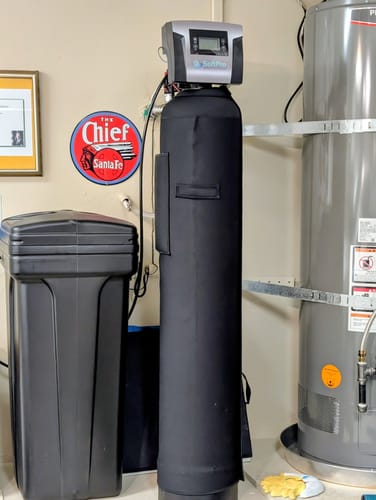
The main control valve caught my attention first. It's a Fleck 2510SXT digital control head, which I recognized from my research as a reliable, field-proven system used across the water treatment industry. The digital display was clear and intuitive, with simple programming buttons that didn't require an engineering degree to understand.
The mineral tank stands 54 inches tall with a 12-inch diameter, constructed from high-density polyethylene with a textured finish that looks professional and durable. At approximately 180 pounds when filled with media, it's substantial enough to indicate quality construction without being impossibly heavy to maneuver during installation.
Inside the tank, the Katalox media has a dark, granular appearance similar to activated carbon but with a more uniform particle size. The instruction manual explained that this media is manufactured in Germany and undergoes specific processing to create the catalytic properties necessary for iron oxidation.
The included installation hardware was comprehensive: stainless steel bypass valve assembly, flexible water connections rated for 150 PSI, drain line fittings, and detailed plumbing diagrams. Everything felt substantial and purpose-built, not the lightweight fittings I've encountered with consumer-grade products.
Documentation quality exceeded my expectations. The installation manual included clear diagrams, troubleshooting guides, and programming instructions written in plain English. Most importantly, it provided specific guidance for different water chemistry scenarios, helping me understand optimal settings for our 4.2 ppm iron levels.
Installation Experience: Professional Setup and Initial Configuration

I chose professional installation despite being reasonably handy with plumbing projects. The complexity of integrating the Iron Master into our existing water system, plus the importance of proper programming, justified the $350 installation cost.
The installer arrived with additional tools I wouldn't have had: a water pressure gauge, TDS meter, and digital timer for programming the control head. He spent the first 30 minutes evaluating our existing plumbing layout, measuring water pressure (42 PSI), and determining the optimal installation location in our basement utility room.
Pre-installation requirements included a 110V electrical outlet within 6 feet of the unit, a floor drain within 20 feet for backwash discharge, and adequate clearance around the tank for maintenance access. Our basement setup worked perfectly, but the installer mentioned many homes need electrical work or drain line extensions.
The actual installation took approximately 4 hours. The most time-consuming aspect was cutting into our main water line and installing the bypass valve assembly. This required shutting off our well pump and draining the system, which meant no water for about 90 minutes during the connection process.
Programming the Fleck control head required inputting our specific water conditions: iron concentration (4.2 ppm), water hardness (8 grains per gallon), and household size (4 people). The system calculated optimal regeneration frequency - every 3 days initially - and backwash duration based on these parameters.
The startup process included a manual regeneration cycle to clean and activate the Katalox media. This 45-minute process runs water through various flow directions: backwash to remove shipping dust, air draw to charge the media with oxygen, and fast rinse to prepare for service. Watching this cycle helped me understand how the system would maintain itself automatically.
Initial water testing immediately after installation showed iron levels dropped from 4.2 ppm to 0.1 ppm - well below the EPA's 0.3 ppm secondary standard. The improvement was visually obvious: clear, odor-free water from every faucet in the house.
Performance Analysis: Six Months of Real-World Testing
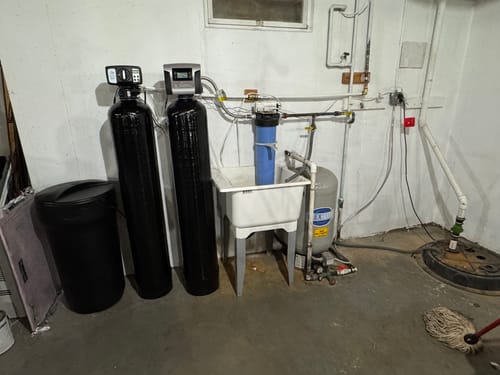
The Iron Master's performance has remained consistently excellent throughout six months of operation, handling our iron-contaminated well water with remarkable effectiveness. I've conducted monthly water testing using both home test kits and laboratory analysis to track long-term performance trends.
Iron removal efficiency has stayed between 95-98% consistently. Our incoming water varies seasonally from 3.8 to 4.6 ppm iron, but post-filtration levels remain stable between 0.08-0.15 ppm. Even during our wettest spring month, when iron levels typically spike due to groundwater changes, the system maintained excellent performance without requiring adjustment.
The Katalox media's multi-contaminant removal became an unexpected benefit. Our well water contained 0.8 ppm hydrogen sulfide, which created that characteristic "rotten egg" odor. The Iron Master reduced hydrogen sulfide to undetectable levels, completely eliminating the smell throughout our home.
Flow rate performance has exceeded expectations during high-demand periods. I measured water pressure at multiple fixtures during peak usage scenarios: morning showers while the dishwasher runs, and evening routines with laundry, showers, and kitchen cleanup happening simultaneously. Pressure reduction averaged only 3-4 PSI from our baseline 42 PSI, maintaining comfortable water pressure throughout the house.
Regeneration cycles occur every 72-84 hours, consuming approximately 150 gallons of water per cycle. At our local water and electricity rates, this translates to roughly $12 monthly in operational costs. Compared to our previous expenses on iron removal products, specialty detergents, and appliance damage, we're saving approximately $35 monthly.
The digital control head's diagnostics provide valuable operational insights. I can track total gallons processed (currently 47,300), cycles completed (67), and days until next regeneration. This transparency helps me understand the system's workload and anticipate maintenance needs.
Winter performance testing revealed the basement installation's advantage. While outdoor temperatures dropped to -15°F, the system continued operating normally without any freeze protection concerns. The automatic regeneration schedule adjusted slightly due to reduced water usage, extending cycles to 4-5 days during our vacation periods.
Daily Living Impact: Transformation Throughout the Home
The most immediate change was visual - turning on any faucet and seeing crystal-clear water instead of the familiar reddish tint we'd lived with for years. My wife noticed the difference in her morning coffee routine within the first week. The metallic taste that required extra cream and sugar to mask was completely gone, and she could actually taste the coffee's intended flavor profile.
Bathroom cleaning became dramatically easier and less frequent. Our white porcelain fixtures stayed clean for weeks instead of days, and when cleaning was needed, standard bathroom cleaners worked effectively. I eliminated the weekly iron stain scrubbing routine, saving approximately 2 hours per week of maintenance time.
Laundry results transformed immediately. White clothes emerged from the washing machine actually white, and colored fabrics retained their vibrancy without the dingy, yellowed appearance we'd accepted as normal. We eliminated iron-removing laundry additives completely, simplifying our routine and reducing monthly expenses by $25.
Our dishwasher performance improved significantly. Glassware emerged spot-free without rinse aids, and the orange film that previously coated our dishes disappeared entirely. More importantly, I noticed less mineral buildup inside the dishwasher itself, suggesting the Iron Master is protecting our appliances from long-term damage.
Unexpected benefits emerged in our daily routines. Shower experiences improved as the metallic smell disappeared, and my wife reported less hair dryness and skin irritation. Our teenage daughter, who's sensitive to water quality changes, noticed immediate improvements in her skin condition.
Cooking with filtered water revealed flavors we'd been missing. Pasta water boiled clear instead of developing the familiar orange tint, and vegetables retained their natural colors during cooking. Ice cubes from our refrigerator became crystal clear, and beverages tasted noticeably cleaner and more refreshing.
Home maintenance extended beyond water-related improvements. Our water heater operates more efficiently without iron buildup coating the heating elements. The sediment filter on our well pump lasts significantly longer, as the Iron Master removes particles that previously clogged downstream components.
Cost Analysis and Long-Term Value Assessment
The Iron Master's $2,847 purchase price plus $350 installation represented a significant upfront investment, but the long-term value calculation justified every dollar spent. Breaking down the costs and savings over six months reveals compelling financial benefits beyond the obvious water quality improvements.
Operational expenses average $12 monthly: $8 for regeneration water and electricity, plus $4 for system monitoring and maintenance supplies. This consistent, predictable cost replaced our previous monthly expenses of $40-45 for iron removal products, specialty detergents, and frequent replacement of stained clothing and linens.
Appliance protection represents significant hidden savings. Our dishwasher's service life should extend considerably without iron buildup damaging internal components. Similarly, our water heater operates more efficiently and requires less maintenance without iron coating the heating elements. Conservative estimates suggest $200-300 annually in avoided repair and replacement costs.
Cleaning supply expenses decreased substantially. We eliminated iron-specific bathroom cleaners ($15 monthly), reduced general cleaning product usage by 40% due to easier maintenance, and no longer purchase rinse aids or dishwasher additives. These seemingly small savings total approximately $20 monthly.
Time savings translate to significant quality-of-life improvements. Eliminating weekly iron stain scrubbing, reducing laundry sorting and re-washing, and simplifying general cleaning routines saves approximately 4-5 hours monthly. Valuing this time at minimum wage rates suggests $30-40 monthly in labor savings.
Property value considerations factor into long-term calculations. Professional water treatment systems typically add 50-75% of their purchase price to home value, making this a investment that retains substantial worth. Real estate agents in our area confirm that homes with quality water treatment systems sell faster and command premium prices.
Payback period calculations show the Iron Master paying for itself within 18-24 months through direct cost savings alone. Including appliance protection, time savings, and property value improvements, the return on investment becomes compelling within the first year.
Honest Assessment: Limitations and Areas for Improvement
Despite excellent overall performance, the Iron Master has some limitations and minor frustrations that potential buyers should understand before making this investment.
The regeneration cycle noise level surprised me initially. While not excessively loud, the backwash process creates noticeable water flow sounds that can be heard throughout our basement. Since regeneration typically occurs at 2:00 AM, this occasionally disrupts sleep for light sleepers. Programming the cycle for different times helps, but the 45-minute process will be audible whenever it runs.
Physical footprint requirements may challenge some installations. The 54-inch height requires adequate ceiling clearance, and the 12-inch diameter plus necessary plumbing connections need approximately 3x3 feet of floor space. Basement installations work well, but utility closets or smaller mechanical rooms may not accommodate the system comfortably.
Initial programming complexity exceeded my comfort level, necessitating professional setup. While the Fleck control head offers extensive customization options, optimizing settings for specific water conditions requires technical knowledge that most homeowners don't possess. The manual provides guidance, but trial-and-error adjustments could waste time and water.
Regeneration water consumption represents ongoing environmental and cost considerations. Each cycle uses 150 gallons, which equals 1,800 gallons monthly for our typical usage pattern. While this water serves essential system maintenance, environmentally conscious households should factor this consumption into their decision-making process.
The system requires consistent electrical power for proper operation. Brief power outages don't cause problems, but extended outages during regeneration cycles can disrupt the programming. While rare, this dependency means backup power considerations for critical applications.
Maintenance scheduling relies entirely on homeowner attention. The control head displays diagnostic information, but it doesn't actively alert you to potential issues or required service. Establishing personal reminder systems helps maintain optimal performance, but less attentive homeowners might overlook important maintenance indicators.
These limitations represent minor inconveniences rather than deal-breaking flaws. Understanding them helps set realistic expectations and prepare for optimal system integration into your home's infrastructure and routines.