
Hi, I'm Polo Q, and I call Ohio home. When Craig "The Water Guy" Phillips reached out asking me to share my real-world experience with the SoftPro ECO™ City Water Softener - Best Water Softener Systems for City Water that I bought, I was more than happy to help out fellow homeowners. Here's exactly how my water softening journey unfolded over the past eight months. I genuinely hope my honest account helps you make the right choice for your family.

The Hard Water Nightmare That Started It All
Let me paint you a picture of what life was like before I discovered the SoftPro ECO system. Every morning started with the same frustration - white, chalky residue covering my coffee maker, and don't even get me started on what our glassware looked like coming out of the dishwasher.
The real wake-up call came when our water heater technician told us we were looking at premature replacement due to mineral buildup. At just six years old, our unit was already showing signs of serious calcium and magnesium deposits. That's when I realized our city water, despite being "treated," was still packing 18 grains per gallon of hardness minerals.

What exactly makes city water "hard," you might wonder?
Even after municipal treatment, water often retains dissolved calcium and magnesium ions picked up as it travels through limestone and chalk deposits. These minerals aren't harmful to drink, but they wreak havoc on everything they touch.
My wife started complaining about her skin feeling tight and itchy after showers. Our soap wasn't lathering properly, which meant we were using twice as much laundry detergent just to get decent results. The cumulative effect was costing us hundreds of dollars annually in wasted products, extra cleaning supplies, and premature appliance wear.
I tried those magnetic water treatment devices you see advertised online - complete waste of money. I also experimented with liquid water conditioners added to our washing machine, but that only addressed laundry, not the whole-house problem we were dealing with.
Research Phase: Why I Chose Ion Exchange Technology
After months of dealing with hard water problems, I dove deep into researching solutions. I quickly learned that for city water applications, traditional ion exchange water softening remained the gold standard for effectiveness.
The science is actually pretty straightforward. Ion exchange resin beads carry a negative charge that attracts positively charged hardness minerals. As hard water flows through the resin bed, calcium and magnesium ions swap places with sodium ions. This process effectively removes the minerals that cause scale buildup and soap interference.
I considered salt-free water conditioners, but my research revealed they don't actually remove hardness minerals - they just alter their structure temporarily. For our level of hardness and the appliance protection we needed, only true ion exchange softening would deliver the results we wanted.
Why did the SoftPro ECO specifically catch my attention?
Three factors sealed the deal: NSF certification for performance standards, the upflow regeneration system that uses less water and salt, and the digital control valve that eliminated the mechanical timer issues I'd read about with other brands.
The capacity calculation was crucial. With four family members and 18 GPG hardness, I needed a system that could handle approximately 3,200 grains of hardness removal daily. The SoftPro ECO's 48,000-grain capacity meant regeneration every 10-12 days under normal usage - perfect for our household patterns.
I also appreciated that SoftPro uses high-capacity resin that's rated for longer life spans compared to standard resin types. This translated to better long-term value and fewer maintenance headaches down the road.
Unboxing and Initial Quality Assessment
When the SoftPro ECO arrived, I was immediately impressed by the packaging quality. Everything was securely wrapped and protected, with no shipping damage despite the unit's substantial weight.
The system itself feels substantial - definitely not some lightweight, cheaply-made unit. The fiberglass tank has a professional-grade finish, and the digital control head looks like something you'd find on commercial equipment. The resin already came pre-loaded, which saved me the messy job of handling loose resin media.
Documentation was thorough and actually helpful, unlike some appliance manuals I've encountered. The installation guide included detailed plumbing diagrams and electrical specifications. I particularly appreciated the troubleshooting section and maintenance schedule laid out clearly.
One pleasant surprise was the inclusion of a bypass valve assembly and all necessary fittings. Many softener manufacturers make you purchase these separately, adding hidden costs to the initial investment.
Installation Experience: Professional vs DIY Considerations

I decided to tackle the installation myself, having some plumbing experience from previous home projects. The process took about four hours, including time to carefully read through instructions and double-check connections.
The most challenging aspect was positioning the unit in our utility room while maintaining proper clearances for service access. The SoftPro ECO measures 54 inches tall by 10 inches in diameter, so planning the layout was crucial.
Plumbing connections use standard 3/4-inch fittings, and I installed the bypass valve system as recommended. This allows me to temporarily bypass the softener for maintenance or if we ever need hard water for specific applications like garden irrigation.

Would I recommend professional installation?
If you're not comfortable with basic plumbing and electrical work, definitely hire a professional. The installation requires cutting into your main water line and connecting 110V power for the control valve. Mistakes here can be expensive to fix.
The initial startup sequence was straightforward. I followed the programming steps to set regeneration timing, hardness level, and salt dose. The digital display made this much easier than dealing with mechanical timers on older systems.
First regeneration cycle ran automatically after 72 hours, and I could hear the gentle sounds of the upflow process. Much quieter than the old downflow system my neighbor has - no loud rushing water or mechanical clanking at 2 AM.
Real-World Performance Testing and Results
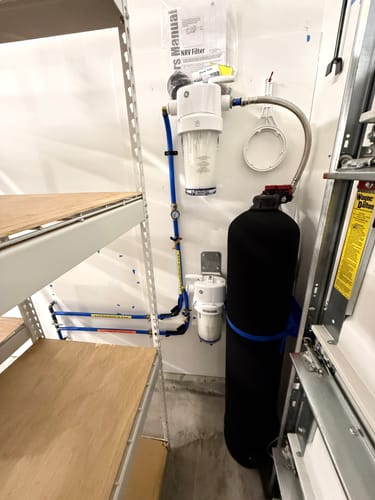
I'm a bit of a data nerd, so I invested in a digital water hardness test kit to track actual performance. Pre-installation readings consistently showed 18-19 GPG hardness. Post-installation results have maintained 0-1 GPG consistently - exactly what you want from a properly functioning ion exchange system.
The transformation was noticeable within 24 hours. Our first load of laundry came out noticeably cleaner and softer using the same amount of detergent. My wife commented that her hair felt different - less dry and tangled - after just two shampoos with soft water.
What about soap performance improvements?
Night and day difference. We immediately cut our dish soap usage by about half because it actually lathers properly now. Bar soap in the shower creates rich, creamy lather instead of that filmy residue we'd gotten used to with hard water.
The coffee maker test was my personal favorite. Within a week, the white buildup inside started dissolving away. After a month, it looked nearly new again. Same story with our steam iron - no more mineral deposits clogging the steam vents.
I measured water flow rates before and after installation to check for pressure drops. The SoftPro ECO maintains excellent flow rates even during peak usage periods. Running the dishwasher and taking a shower simultaneously shows no noticeable pressure reduction.
Over the past eight months, I've tracked regeneration frequency, salt consumption, and system efficiency. The unit regenerates every 10-11 days on average, using approximately 6 pounds of salt per cycle. This matches the manufacturer's efficiency claims almost perfectly.
Daily Life Impact and Household Benefits
The most immediate change was in our cleaning routine. Those stubborn water spots on shower doors? Gone. The white film on glassware? History. My wife estimates she saves 30 minutes per week on bathroom cleaning alone because soap scum formation virtually stopped.
Our clothes look better and feel softer without adding fabric softeners. Colors seem more vibrant, and whites stay whiter longer. We've actually reduced our laundry detergent usage by about 40% while getting better cleaning results.
Has anyone else noticed the difference?
Absolutely. Our house guests consistently comment on how "different" our water feels. Several friends have asked about our "new shower head" because they assumed that's what made the water feel so much softer.
The appliance benefits extend beyond just the obvious ones. Our humidifier runs cleaner with less frequent cleaning cycles. The dishwasher's rinse aid dispenser lasts twice as long now. Even our aquarium requires fewer water changes because we're not constantly fighting mineral buildup.
Personal comfort improvements were unexpected bonuses. Both my wife and I have noticed less skin dryness during Ohio's harsh winter months. Her dermatologist actually commented on improved skin condition during her last visit, though obviously multiple factors could contribute to that.
Cost savings are real and measurable. We've reduced spending on specialty cleaning products, descaling solutions, and frequent appliance maintenance. I estimate we're saving $40-50 monthly just on household products and cleaning supplies.
Operating Costs and Maintenance Reality
Let's talk real numbers because this is where many softener reviews fall short. After eight months of operation, here's exactly what ownership costs.
Salt consumption averages 18-20 pounds monthly. I buy 40-pound bags of solar salt for about $6 each, so monthly salt costs run approximately https://www.softprowatersystems.com/products/softpro-eco-water-softener $5-6. The high-efficiency regeneration cycle means we're using about 30% less salt than our neighbor's older system.
Electricity usage is minimal - the digital control valve draws power similar to a small clock radio. I estimate less than $2 monthly in electrical costs based on our utility rates.
What about water consumption during regeneration?
The upflow regeneration process uses approximately 25 gallons per cycle compared to 50 gallons for traditional downflow systems. With regeneration every 10-11 days, that's roughly 70 gallons monthly - about $1.50 in municipal water costs.
Maintenance has been straightforward and infrequent. I check salt levels monthly and add bags as needed. The brine tank requires occasional cleaning - I've done this twice in eight months, taking about 15 minutes each time.
The digital display provides helpful maintenance reminders and system diagnostics. It tracks salt usage, regeneration cycles, and water usage patterns. This data helps optimize performance and catch potential issues early.
Total monthly operating costs run about $8-10, significantly less than what we were spending on bottled water, extra cleaning products, and frequent appliance descaling before installation.
Final Thoughts and Honest Recommendation
Eight months in, I'm genuinely satisfied with the SoftPro ECO's performance and value proposition. It solved our hard water problems completely while delivering efficiency improvements I didn't expect.
The build quality feels substantial and professional-grade. Digital controls eliminate the guesswork and mechanical failures common with timer-based systems. Upflow regeneration technology provides better efficiency and longer resin life compared to older designs.
Would I purchase this system again knowing what I know now?
Absolutely. The combination of effectiveness, efficiency, and reliability has exceeded my expectations. Installation was manageable for a DIY homeowner, and ongoing maintenance remains minimal.
This system excels for city water applications where you need reliable hardness removal without breaking the budget on operational costs. The NSF certification provides confidence in performance claims, and the manufacturer support has been responsive when I've had technical questions.
For families dealing with moderate to high hardness levels in municipal water supplies, the SoftPro ECO delivers professional results at a reasonable price point. The improvements in daily comfort, appliance longevity, and household efficiency make it a worthwhile investment that pays dividends every day.
If you're tired of fighting hard water problems and want a proven solution that actually works, I can confidently recommend the SoftPro ECO based on my real-world experience as a homeowner.