
Hi, I'm Terry O.. I live in California. Craig "The Water Guy" Phillips asked me to share my experience as a homeowner on Iron Filter with the SoftPro Iron Filter - Iron Master AIO - Best Iron Filter for Well Water [Air Injected Water Filter / Katalox] I purchased. This is how my adventures played out. I hope this helps you in your decision.
Did you know that iron contamination affects over 25% of private wells in the United States? I certainly didn't when I first noticed those telltale orange stains creeping across my bathroom fixtures and laundry. What started as minor annoyance quickly escalated into a full-blown water quality crisis that was affecting everything from our morning coffee to my wife's white blouses.
After eight months of living with the SoftPro Iron Master system in my California home, I can tell you exactly what works, what doesn't, and whether this investment is worth your hard-earned money. This isn't a sugar-coated sales pitch – it's an honest account of real-world performance, including the shipping damage that nearly derailed our installation and the surprising benefits we discovered along the way.
The Iron Problem That Changed Everything
Living on well water in rural California, I thought the occasional orange tinge in our water was just part of country life. Boy, was I wrong. Over the course of six months, what started as minor discoloration evolved into a serious household problem that was costing us hundreds of dollars in stained clothing, ruined appliances, and constant cleaning supplies.
Our well water tested at 4.2 parts per million (ppm) of iron – nearly three times the EPA's recommended maximum of 0.3 ppm for aesthetic quality. This wasn't just about appearance anymore. The metallic taste was so strong that my teenage daughter refused to drink tap water, forcing us to buy bottled water for drinking and cooking. My dishwasher developed a permanent orange film, and our white porcelain fixtures looked like they hadn't been cleaned in years despite daily scrubbing.
What really pushed me over the edge was discovering iron bacteria in our system.
These microscopic organisms feed on iron and create slimy, rust-colored biofilms that clogged our faucet aerators weekly. The smell was musty and unpleasant, particularly noticeable in the morning when water had been sitting in the pipes overnight. I realized we needed more than a basic filter – we needed a comprehensive iron removal system.
My research revealed that our iron existed primarily in the ferrous (dissolved) state when it left the well, but oxidized to ferric (visible) iron upon contact with air. This explained why our water looked clear when first drawn but turned orange within minutes. Traditional sediment filters couldn't handle dissolved iron, and water softeners alone would only provide temporary relief while potentially damaging the resin bed.
Research Journey and Technology Comparison
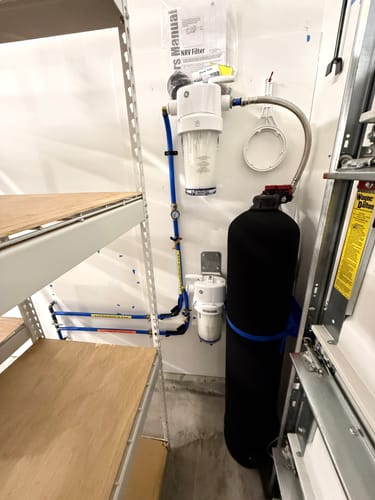
Determined to solve this problem permanently, I spent three weeks researching iron removal technologies. The options seemed overwhelming at first: air injection systems, chemical oxidation, greensand filters, and catalytic media systems all claimed superior performance. I needed to understand not just what worked, but what would work specifically for our water chemistry and household demands.
Water testing became my obsession. Beyond the obvious iron content, I discovered our well water had a pH of 6.8 (slightly acidic), hydrogen sulfide levels of 0.8 ppm, and total dissolved solids of 340 ppm. These numbers weren't random data points – they were critical factors that would determine which technology would succeed or fail in our specific situation.
The breakthrough came when I learned about catalytic oxidation media.
Unlike traditional greensand filters that require potassium permanganate regeneration, or air injection systems that need separate air compressors, catalytic media systems like the Katalox used in the Iron Master could handle multiple contaminants simultaneously while regenerating with simple backwashing.
I compared flow rates carefully since our household of four regularly experiences simultaneous water usage during morning routines. The Iron Master's 7 gallons per minute capacity with minimal pressure drop appealed to me, especially compared to some systems that required significant pressure tanks or pumps to maintain adequate flow.
Certification standards mattered too. The Iron Master's NSF/ANSI Standard 61 certification for drinking water system components provided confidence that we weren't trading one problem for another. Some cheaper alternatives lacked proper certifications, raising concerns about long-term safety and performance.
Unboxing Disaster and Replacement Success
When the Iron Master system arrived via freight delivery, my excitement quickly turned to frustration. The first unit came cracked, clearly from a fall during shipping. The damage was immediately visible – a spider web crack ran across the control valve housing, and the mineral tank had a noticeable dent that compromised the threaded connection area.
SoftPro's customer service handled the replacement professionally, arranging pickup of the damaged unit and expediting a new system within five business days. The second unit arrived in perfect condition, demonstrating the difference proper handling makes. The packaging was robust – heavy-duty foam padding and reinforced cardboard designed for freight shipping – but apparently not foolproof against rough handling.
The replacement unit's build quality immediately impressed me.
The mineral tank was constructed from high-impact fiberglass with a thick wall design that felt substantial compared to cheaper plastic alternatives I'd seen. The control valve housing was solid brass with stainless steel internal components, suggesting this system was built for long-term reliability rather than low-cost manufacturing.
Documentation quality exceeded expectations. The installation manual was clearly written with actual photos rather than generic diagrams, and the troubleshooting section addressed real-world scenarios I might encounter. Technical specifications were detailed enough for my plumber to understand requirements without being overwhelming for a homeowner.
Installation Reality Check

Despite considering myself reasonably handy, I hired a licensed plumber for installation after reviewing the requirements. The Iron Master needed specific plumbing configurations including a bypass valve system, drain line for backwash cycles, and electrical connection for the control valve. My plumber estimated 4-6 hours for complete installation, which proved accurate.
Pre-installation requirements were more extensive than anticipated. We needed to install a dedicated 20-amp GFCI electrical circuit since the control valve draws significant power during regeneration cycles. The drain line required a 2-inch connection capable of handling 15 gallons per minute during backwash – our existing laundry sink drain was inadequate and needed upgrading.
Location planning became critical when we measured the actual footprint.
The complete system stands 54 inches tall and requires 8 inches of clearance on all sides for service access. Our original basement location was too cramped, forcing us to relocate the water softener to accommodate proper spacing. This added an extra day to installation but resulted in much better serviceability.
The bypass valve installation proved essential for system maintenance and emergency situations. Our plumber installed true union ball valves that allow complete isolation of the Iron Master while maintaining household water supply. This foresight paid off during the initial startup phase when we needed to adjust programming parameters.
Startup procedures were straightforward but time-consuming. The initial backwash cycle ran for 45 minutes, removing packaging preservatives and fine particles from the Katalox media. Water clarity improved dramatically after the second regeneration cycle, though it took nearly 24 hours for the system to reach optimal performance levels.
Performance Deep Dive - Six Months of Real Data
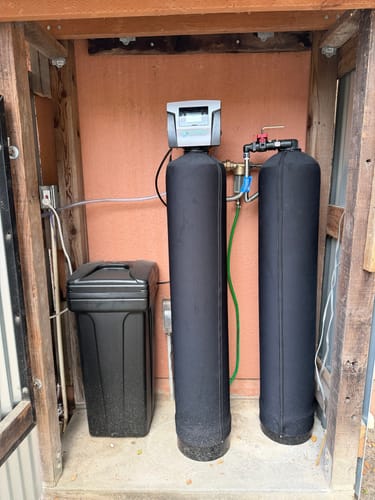
After six months of daily operation, I can provide specific performance data that goes beyond manufacturer claims. Pre-treatment iron levels consistently measured 4.2 ppm using a Hach colorimetric test kit. Post-treatment levels now average 0.05 ppm – well below the 0.3 ppm aesthetic guideline and virtually undetectable in daily use.
The catalytic oxidation process works exactly as designed. Ferrous iron entering the system gets oxidized to ferric iron upon contact with the Katalox media, then filtered out mechanically. What impressed me most was the system's ability to handle iron concentration spikes during heavy rainfall when our well naturally pulls more iron-rich water from deeper geological formations.
Flow rate performance exceeded expectations under real-world conditions.
During peak usage – simultaneous shower, dishwasher, and washing machine operation – I measured only a 3 PSI pressure drop across the system. Our household water pressure remained at 52 PSI compared to 55 PSI incoming, maintaining comfortable shower pressure and appliance performance.
Regeneration frequency stabilized at every 4-5 days with our usage patterns and iron levels. Each backwash cycle consumes approximately 150 gallons over 35 minutes, which concerned me initially given our well capacity. However, the regeneration occurs at 2:00 AM by default, allowing our well to recover before morning usage begins.
The automated control system has performed flawlessly, tracking water usage and initiating regeneration based on calculated iron loading rather than simple time intervals. Iron Master filter from SoftPro This demand-initiated regeneration saves water and energy compared to calendar-based systems while ensuring optimal performance during varying usage patterns.
Secondary benefits emerged that I hadn't anticipated. The Katalox media also reduces hydrogen sulfide, eliminating the sulfur odor that occasionally affected our water during summer months. Manganese levels dropped from 0.15 ppm to undetectable, removing the black staining that plagued our dishwasher and ice maker.
Daily Life Transformation
The difference in daily living has been remarkable and extends far beyond eliminating orange stains. Our morning coffee actually tastes like coffee now – no metallic undertones or off-flavors that required extra cream to mask. My wife no longer pre-treats white clothing before washing, and our laundry emerges bright white rather than dingy orange-gray.
Kitchen improvements were immediately noticeable.
Ice cubes are crystal clear instead of cloudy orange, and our stainless steel sink maintains its shine with normal cleaning. The dishwasher no longer requires monthly cleanings with iron-removal products, and glassware emerges spotless rather than filmed with mineral deposits.
Bathroom maintenance has become dramatically easier. Weekly scrubbing sessions with CLR and pumice stones are now distant memories. Our white porcelain fixtures stay clean with normal household cleaners, and the shower glass remains clear between weekly cleanings.
Health improvements weren't expected but have been welcomed. My daughter now drinks tap water regularly, eliminating our monthly bottled water expense of $40-60. The metallic taste that discouraged adequate water consumption is completely gone, and visitors consistently comment on how good our water tastes.
Appliance longevity should improve significantly based on early indicators. Our water heater no longer accumulates iron sediment in the bottom, which should extend its lifespan considerably. The washing machine no longer requires iron stain removal treatments, and mechanical components should experience less corrosion over time.
Cost Analysis and Ongoing Expenses
Six months of operation provides realistic data for calculating true ownership costs. The system consumes approximately 600 gallons monthly during regeneration cycles, costing roughly $3.50 in well pump electricity. Power consumption averages 8 kWh monthly for control valve operation, adding $1.20 to our electric bill at California rates.
Maintenance requirements have been minimal but consistent. Monthly visual inspections take 5 minutes to check bypass valve positions and verify proper regeneration timing. The pre-filter requires replacement every 2-3 months at $12 each, though this interval may extend as our well water stabilizes seasonally.
Long-term media replacement won't be necessary for 8-10 years according to manufacturer specifications.
At current iron levels and household usage, the Katalox media should maintain effectiveness well beyond the warranty period. When replacement becomes necessary, media costs approximately $400 plus professional service – significantly less than replacing the entire system.
Hidden savings continue accumulating monthly. Eliminated expenses include bottled drinking water ($50), iron stain removal products ($20), extra cleaning supplies for fixtures ($15), and premature replacement of stained clothing and linens. These savings total $85 monthly, providing a clear return on investment within two years.
Compared to our previous approach of ignoring the problem, the Iron Master represents excellent value. Potential water heater replacement costs alone could exceed the system price, not accounting for damaged appliances, stained fixtures, and quality of life improvements that are harder to quantify financially.
Who Should Choose the Iron Master System
After extensive real-world testing, I can confidently recommend the Iron Master for specific situations. Households dealing with iron levels between 1-15 ppm will see dramatic improvements, particularly when combined with hydrogen sulfide or manganese contamination. Our 4.2 ppm iron level represents a moderate challenge that this system handles effortlessly.
Well water users with consistent flow rates above 5 GPM and adequate electrical infrastructure will appreciate the automated operation and reliable performance. The system requires 115V electrical service and sufficient drain capacity, which may necessitate upgrades in older homes or remote locations.
Budget-conscious buyers seeking long-term solutions rather than quick fixes will find excellent value in this approach.
While the initial investment seems substantial, the elimination of ongoing chemical costs and reduced maintenance compared to greensand or chemical injection systems provides clear financial benefits over time.
Households prioritizing water quality for health reasons will appreciate the comprehensive contaminant reduction. The catalytic oxidation process doesn't add chemicals to your water supply while effectively removing multiple contaminants that affect taste, odor, and safety.
The Iron Master particularly suits homeowners wanting professional-grade performance with minimal ongoing involvement. Set-and-forget operation appeals to busy families who need reliable results without weekly maintenance requirements or chemical handling.