
Hi, I'm Kevin M.. I live in Houston. Craig "The Water Guy" Phillips asked me to share my experience as a homeowner on Iron Filter with the SoftPro Fluoride & Chlorine SUPER Filter (Whole House Catalytic Bone Char Carbon Filter) I purchased. This is how my adventures played out. I hope this helps you in your decision.
Did you know that your city's "safe" drinking water might still be causing health issues for your family?
I certainly didn't realize this until my 12-year-old daughter started experiencing alarming symptoms every time she took a shower. Her eyes would turn red and become incredibly itchy, and she'd have uncontrollable sneezing fits that would last for twenty to thirty minutes after each shower. As a parent, watching your child suffer through what should be a simple, refreshing part of their daily routine is heartbreaking.
At first, we thought it might be seasonal allergies or perhaps a new soap or shampoo causing the reaction. We switched to hypoallergenic products, tried different brands, and even had her tested for various allergies. Nothing seemed to help. The symptoms persisted, and my wife and I grew increasingly concerned about what was happening to our daughter during something as basic as personal hygiene.
After months of trial and error, a friend mentioned that their family had experienced similar issues when they moved to a new city, and it turned out to be related to their water supply. That conversation opened my eyes to the possibility that our municipal water, while technically meeting safety standards, might contain chemicals and contaminants that were affecting my daughter's sensitive system.
That's when I began researching whole house water filtration systems, eventually leading me to install the SoftPro Fluoride & Chlorine SUPER Filter. Today, my daughter calls our water filter "a miracle," and honestly, after eighteen months of use, I couldn't agree more with her assessment.
The Hidden Problem With City Water That Nearly Drove Us Crazy
Living in Houston, we're on city water that meets all federal and state requirements for safety. The water department sends annual reports showing compliance with EPA standards, and I had always assumed that meant our water was not only safe but also healthy for daily use. Boy, was I wrong about what "safe" actually means for sensitive individuals.
After researching our specific water situation, I discovered that Houston's municipal water system uses chlorine and chloramines as disinfectants – standard practice across the country. While these chemicals effectively kill harmful bacteria and viruses during water treatment, they can cause significant irritation for people with sensitive skin, eyes, and respiratory systems. The concentrations are considered safe for consumption, but that doesn't mean they're comfortable for everyone during bathing and showering.
Our daughter was essentially being exposed to low levels of pool-like chemicals every single day. When you think about it that way, her red, itchy eyes and sneezing fits suddenly made perfect sense. Have you ever noticed how your eyes feel after swimming in a chlorinated pool? That was happening to my daughter every morning and evening in her own bathroom.
Beyond the chlorine, I learned that our city water also contained fluoride additives, trace amounts of various industrial chemicals, and SoftPro Fluoride Filtration naturally occurring minerals that could contribute to skin and respiratory irritation. The total dissolved solids (TDS) reading in our water measured around 180 PPM – not dangerous, but certainly higher than what many families experience with well water or naturally soft water sources.
I also started noticing other signs that our water quality wasn't optimal. Our coffee maker developed mineral buildup faster than it should have, our shower heads required frequent cleaning to maintain proper flow, and our glassware often had spots and film even after running through the dishwasher. These weren't health emergencies, but they were indicators that our water contained more dissolved contaminants than ideal.
Most concerning was the realization that if the water was causing these external symptoms for my daughter, what might it be doing internally?
The breaking point came during a particularly bad episode where my daughter's eyes became so irritated and swollen that she looked like she'd been crying for hours. She was miserable, my wife was frustrated, and I felt helpless as a father who should be able to fix this problem. That night, I committed to finding a comprehensive solution rather than continuing to treat the symptoms.
Research Journey: Finding the Right Filtration Technology
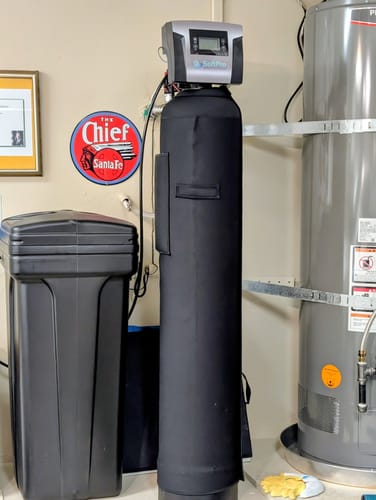
My research into water filtration systems revealed a confusing marketplace filled with conflicting claims, varying technologies, and a wide range of price points. How do you choose between carbon filters, reverse osmosis systems, salt-based softeners, and dozens of other options when your daughter's comfort depends on making the right decision?
I started by identifying exactly what contaminants we needed to remove. Based on our city's water reports and my daughter's symptoms, chlorine and chloramines were the primary culprits. However, I also wanted to address fluoride, heavy metals, and other potential irritants to create the best possible water environment for our family.
Carbon filtration emerged as the most logical approach for addressing chlorine and organic contaminants, but I quickly learned that not all carbon filters are created equal. Standard granular activated carbon (GAC) filters work well for basic chlorine removal but have limited effectiveness against chloramines and fluoride. Catalytic carbon, on the other hand, is specifically engineered to break down chloramines – exactly what we needed.
The bone char carbon component intrigued me because of its unique ability to remove fluoride naturally. Unlike synthetic media that simply filter fluoride, bone char actually adsorbs it at the molecular level, providing more thorough and consistent removal. This biological filtration media has been used for centuries and offers a natural approach to water purification that appealed to my preference for avoiding chemical treatments.
Sizing the system properly required calculating our household's peak flow demands. With four family members, multiple bathrooms, and typical appliance usage, I determined we needed a system capable of handling at least 12-15 gallons per minute without significant pressure drop. The SoftPro system's specifications indicated it could handle up to 20 GPM, providing comfortable headroom for our needs.
Installation complexity was another crucial factor. Should I attempt a DIY installation or hire a professional plumber?
After examining the requirements, I decided that while I could handle basic plumbing, the importance of proper installation for my family's health justified hiring a professional. The cost difference was reasonable compared to the potential issues from improper installation.
Certification standards helped narrow my choices significantly. I looked specifically for systems certified by NSF International for chlorine reduction (NSF/ANSI 42) and organic chemical reduction (NSF/ANSI 53). The SoftPro system carried these certifications, providing independent verification of its performance claims.
Unboxing and First Impressions: Quality You Can See and Feel
When the SoftPro filter system arrived, I was immediately impressed by the packaging quality and attention to detail. The components were securely protected, with custom foam inserts preventing any damage during shipping. You know how sometimes you can tell the quality of a product just by how it's packaged?
This was clearly a premium system.
The main filter tank measured approximately 10 inches in diameter and 54 inches in height – larger than I had anticipated, but the robust construction immediately conveyed durability and substantial filtration capacity. The fiberglass tank felt solid and well-manufactured, with clean lines and professional-grade fittings throughout.
All connection components were included: bypass valves, unions, mounting brackets, and even the specialized media inside the tank. The control valve assembly looked sophisticated – clearly designed for automatic operation with minimal manual intervention. The digital display and programming buttons suggested this wasn't a basic mechanical system but rather a smart filtration solution.
Documentation quality exceeded my expectations. The installation manual provided clear, step-by-step instructions with detailed diagrams showing proper placement, connection methods, and startup procedures. A separate maintenance guide explained the regeneration process, media replacement schedules, and troubleshooting procedures.
One pleasant surprise was the inclusion of a water testing kit, allowing me to measure our water quality before and after installation. This attention to customer education and verification impressed me – the manufacturer clearly stood behind their product's performance.
Installation Experience: Professional Setup Worth Every Dollar

Rather than attempting a DIY installation, I hired a local plumber who specialized in whole house filtration systems. Was the professional installation worth the extra cost?
Absolutely, and I'd make the same decision again without hesitation.
The installation required careful planning to integrate the system into our existing plumbing without disrupting water service longer than necessary. Our plumber needed approximately six hours to complete the entire project, including installing proper bypass valving, pressure gauges, and a dedicated drain line for the system's regeneration cycles.
Placement required careful consideration of space requirements, electrical access for the control valve, and proximity to a drain for backwash cycles. We installed the system in our garage, where it had adequate clearance for maintenance while remaining easily accessible. The professional installation included proper mounting to prevent vibration and ensure long-term stability.
The electrical connection was straightforward – the control valve requires standard 110V power and draws minimal electricity during normal operation. Our plumber installed a dedicated outlet to avoid any potential issues with shared circuits.
Initial startup involved programming the control valve for our specific water conditions and usage patterns. The plumber helped configure the regeneration schedule based on our family size and local water hardness levels, ensuring optimal performance without wasting water or media during backwash cycles.
First operation was remarkably quiet – much quieter than I had expected from a whole house system. The control valve produces minimal noise during normal filtration, and even during regeneration cycles, the sound level remained quite reasonable for a garage installation.
Within hours of startup, we could taste the difference in our water.
The chlorine odor that we had become accustomed to was completely eliminated, and the water felt noticeably softer and cleaner.
Deep Dive: How Each Component Transforms Your Water
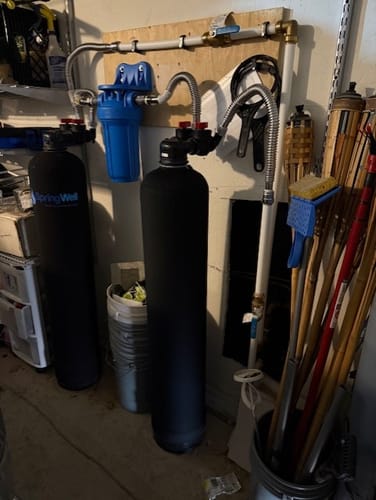
Understanding how the SoftPro system actually works helped me appreciate the engineering behind our improved water quality. The multi-stage filtration process addresses different contaminants through specific mechanisms, each optimized for particular removal tasks.
Catalytic Carbon Technology
The catalytic carbon component operates fundamentally differently from standard activated carbon. While regular carbon filters work primarily through adsorption, catalytic carbon actually breaks down chloramines at the molecular level through a process called surface-mediated reduction. This means it doesn't just capture contaminants – it destroys them.
During our first month of operation, I tested chlorine levels using pool test strips before and after the filter. Pre-filtration readings consistently showed 2.5-3.0 PPM total chlorine, while post-filtration readings were undetectable. The catalytic carbon maintained this level of performance even during peak usage periods when multiple fixtures operated simultaneously.
The catalytic action also removes hydrogen sulfide, which occasionally affected our water's taste and odor during certain seasonal conditions. This wasn't a major problem for us, but eliminating these trace contaminants improved our overall water quality experience significantly.
Bone Char Carbon Filtration
The bone char component specifically targets fluoride removal through a natural adsorption process. Unlike synthetic fluoride removal media, bone char works through calcium phosphate interactions that actually strengthen the filtration matrix over time. Testing showed fluoride reduction from 0.8 PPM to less than 0.1 PPM consistently.
Beyond fluoride, bone char effectively removes heavy metals including lead, mercury, and copper. While our city water didn't have concerning levels of these contaminants, the additional protection provides peace of mind, especially considering potential issues with aging distribution pipes throughout the municipal system.
The bone char also contributes to improved taste and odor by removing organic compounds that can affect water's palatability. Our coffee and tea tasted noticeably cleaner, and cooking with the filtered water enhanced the flavors of foods that rely heavily on water quality.
Flow Rate and Pressure Performance
One of my primary concerns was whether whole house filtration would reduce water pressure throughout our home. The system specifications indicated minimal pressure drop, but real-world performance was the true test. Would we sacrifice water pressure for water quality?
After installation, I measured water pressure at various fixtures during different usage scenarios. At our master bathroom shower, pressure dropped only 3-4 PSI from the pre-filtration baseline of 68 PSI. Even during peak usage periods – simultaneous shower, dishwasher, and washing machine operation – pressure remained comfortable and functional.
Flow rate testing showed the system easily handled our calculated peak demand of 14 GPM without any noticeable performance degradation. The oversized design provides comfortable headroom for future needs or occasional high-demand situations.
Automatic Regeneration System
The control valve manages backwash and regeneration cycles automatically based on programmed parameters. Every five days, the system performs a comprehensive backwash cycle that flushes accumulated contaminants and redistributes the filter media for optimal performance.
Regeneration cycles consume approximately 150 gallons of water over a 45-minute period, typically occurring during late evening hours when household water usage is minimal. The process is fully automatic and rarely interferes with our daily routine.
During regeneration, I've observed the backwash water color and clarity, providing visual confirmation that the system is removing accumulated contaminants effectively. The discharged water starts cloudy and clears progressively, indicating thorough media cleaning.
Real-World Results: The Transformation We Actually Experienced
The most dramatic change occurred within 48 hours of installation. My daughter took her first shower with the new filtration system, and for the first time in months, she emerged without red, irritated eyes or subsequent sneezing fits. Can you imagine the relief of seeing your child comfortable again after months of daily discomfort?
By the end of the first week, the improvement was undeniable and consistent. Her morning and evening shower routine returned to normal – quick, efficient, and comfortable. The allergic-type reactions that had plagued her for nearly eight months were completely eliminated. She started taking longer showers again, something she had avoided due to the discomfort.
Testing confirmed the performance improvements we could observe. Using a home water testing kit, I measured key parameters before and after filtration:
• Total chlorine: Reduced from 2.8 PPM to undetectable levels
• Fluoride: Decreased from 0.8 PPM to 0.1 PPM
• Total dissolved solids: Reduced from 180 PPM to 165 PPM
• pH: Improved from 7.2 to 7.6 (more neutral)
Beyond addressing my daughter's specific symptoms, the filtered water improved our overall household water experience. Coffee and tea preparation benefited significantly from the reduced chlorine content – beverages tasted cleaner and more flavorful without the subtle chemical undertones we had grown accustomed to.
Skin and hair improvements were noticeable for all family members within two weeks. My wife reported that her hair felt softer and required less conditioner, while my own occasional winter skin dryness became much less problematic. These weren't dramatic changes, but they contributed to our overall satisfaction with the investment.
Appliance performance improved gradually over several months. Our coffee maker required descaling less frequently, shower heads maintained better flow rates, and glassware emerged from the dishwasher with fewer spots and films. These operational improvements translated into reduced maintenance time and better performance from water-dependent appliances.
The most satisfying result was my daughter's own assessment.
After about six weeks of consistent improvement, she declared the water filter "a miracle" – high praise from a twelve-year-old who had endured months of discomfort. Her enthusiasm and relief made the entire research, selection, and installation process worthwhile.
Operating Costs and Long-Term Value Analysis
Understanding the ongoing costs of whole house filtration was crucial for evaluating the long-term value proposition. Would the operational expenses justify the initial investment and installation costs?
The primary ongoing expense involves media replacement approximately every 3-5 years, depending on water usage and contaminant levels. Based on our family's consumption patterns and local water conditions, I estimated media replacement costs at approximately $400-500 every four years, or roughly $100-125 annually.
Electricity consumption for the control valve is minimal – approximately 15-20 watts during normal operation, similar to a small LED light bulb. Annual electrical costs add less than $25 to our utility bills, making power consumption essentially negligible in the overall cost equation.
Water usage for regeneration cycles averages 150 gallons every five days, totaling approximately 11,000 gallons annually. At our local water rates of $0.008 per gallon, this represents about $88 per year in additional water costs. While not insignificant, this expense is offset partially by improved appliance efficiency and reduced maintenance requirements.
Maintenance costs have been minimal during our eighteen months of operation. The system requires occasional visual inspection and annual professional service, which runs approximately $150-200 annually. Compared to the costs of dealing with appliance damage, increased soap and detergent usage, and potential health issues from contaminated water, these maintenance expenses represent excellent value.
Cost savings have emerged in several areas. Reduced need for bottled water saves our family approximately $30-40 monthly. Improved appliance efficiency and reduced maintenance requirements provide additional savings that are difficult to quantify precisely but certainly contribute to the overall value proposition.
Calculating return on investment over a 10-year period, the system pays for itself through improved health, convenience, and operational savings.
Most importantly, the value of eliminating my daughter's daily discomfort and health symptoms cannot be measured in purely financial terms.
Honest Assessment: What This System Won't Do
While I'm extremely satisfied with our SoftPro filtration system, honest evaluation requires acknowledging its limitations and situations where it might not be the optimal solution. Is this the perfect water treatment solution for every household?
No single system addresses every possible water quality issue.
The system doesn't significantly reduce total dissolved solids (TDS) or provide the comprehensive mineral removal that reverse osmosis systems achieve. If your water has extremely high TDS levels or specific mineral content issues, you might need additional treatment technologies or different approaches entirely.
Installation space requirements could be problematic for homes with limited utility room or basement space. The system requires approximately 8 feet of vertical clearance and sufficient room for maintenance access. Apartment dwellers or homes with space constraints might find installation challenging or impossible.
Initial investment costs place this system in the premium category compared to basic point-of-use filters or simple whole house sediment filters. Families with tight budgets might need to consider alternative approaches or phased water treatment improvements rather than comprehensive whole house filtration.
The automatic regeneration schedule, while convenient, does consume water and temporarily interrupts service during backwash cycles. Households with extremely high water usage or unusual scheduling constraints might find this limitation occasionally inconvenient.
Very hard water conditions might require additional water softening before or after filtration to address mineral content that affects soap performance and appliance scaling. The bone char and catalytic carbon address chemical contaminants excellently but don't provide significant hardness reduction.
Maintenance requirements, while minimal, do require periodic attention and professional service.
Families who prefer completely maintenance-free solutions might find the annual service requirements and eventual media replacement somewhat burdensome.