
Hi, I'm Roger M.. I live in Phoenix.
Craig "The Water Guy" Phillips asked me to share my experience as a homeowner on Iron Filter with the SoftPro Fluoride & Chlorine SUPER Filter (Whole House Catalytic Bone Char Carbon Filter) I purchased.
This is how my adventures played out. I hope this helps you in your decision.
Like many Phoenix homeowners, I thought our city water was pretty decent until I started noticing subtle issues that gradually became impossible to ignore. The chlorine smell hitting me every morning in the shower, that lingering aftertaste in my coffee despite using what I thought was a good countertop filter, and honestly, just a growing concern about what exactly was flowing through our pipes every day.
After months of research and comparing different whole house filtration systems, I decided on the SoftPro Fluoride & Chlorine SUPER Filter. Six months later, I'm ready to share the real story – the good, the challenging, and everything in between.
The Water Quality Wake-Up Call That Started Everything
Living in Phoenix, you'd think municipal water quality would be straightforward, but I started paying closer attention after a neighbor mentioned their whole house filter. I began noticing things I'd previously dismissed as normal.
The chlorine odor was the first red flag. Every morning, stepping into the shower felt like entering a swimming pool changing room. I'd gotten so used to it that I didn't realize how strong it had become until I started consciously noticing.
Then there was the taste issue. softprowatersystems.com Even with our refrigerator filter, drinking water had this underlying chemical taste that became more apparent once I started focusing on it. Coffee, tea, even cooking – everything seemed to carry this subtle but persistent off-flavor.
What really concerned me was learning about chloramine usage in Phoenix water treatment.
Unlike chlorine, which dissipates relatively quickly, chloramine is much more persistent and harder to remove with basic filtration. Standard carbon filters that work well for chlorine often struggle with chloramine, which explained why our existing filtration wasn't addressing the taste and odor issues effectively.
I also discovered that Phoenix water contains naturally occurring fluoride, plus additional fluoride added during treatment. While I'm not anti-fluoride for dental health, I preferred having control over our family's exposure levels, especially for cooking and drinking.
The research phase revealed something crucial: most whole house filters focus on sediment and basic chlorine removal, but comprehensive treatment of chloramine, fluoride, and various chemical contaminants requires specialized media. That's what led me to investigate catalytic carbon and bone char filtration technologies.
Why I Chose This Specific Filtration Technology
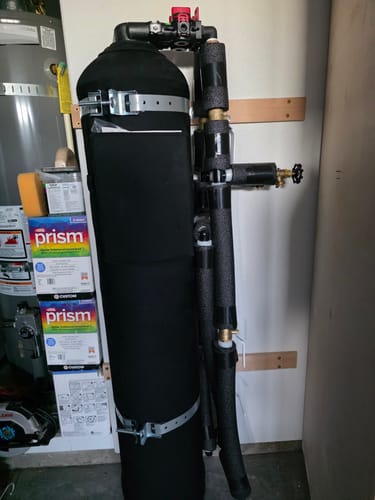
After weeks of research, I realized that not all carbon filtration is created equal. Standard granulated activated carbon works well for basic chlorine and some organic compounds, but catalytic carbon operates differently – it actually breaks down chloramine rather than just adsorbing it.
The bone char component was equally important for my situation. Bone char has a unique affinity for fluoride removal that regular activated carbon simply can't match. Since Phoenix water contains both naturally occurring and added fluoride, this was a key decision factor.
But here's what really sold me on the SoftPro system: the upflow design.
Most whole house filters use downflow, which can create channeling where water finds the path of least resistance through the media bed. Upflow ensures even contact with the entire media bed and prevents the compaction issues that reduce filter effectiveness over time.
I also appreciated the system's flow rate capacity. At 7 GPM, it could handle our household's peak demand without creating pressure drops during simultaneous usage – running the dishwasher while someone's showering, for example.
The backwash capability was another deciding factor. Instead of replacing expensive filter cartridges, the system cleans itself through periodic backwashing, which extends media life significantly and reduces long-term operating costs.
Certification was crucial too. The system meets NSF standards for chlorine, chloramine, and various organic chemical removal, plus the bone char component is specifically tested for fluoride reduction.
Unboxing and Pre-Installation Assessment
The system arrived in a substantial wooden crate – definitely not something you're carrying in from the porch alone. The professional packaging immediately conveyed that this was serious equipment, not a basic consumer filter.
First impression: this is a substantial piece of equipment. The main tank stands about 54 inches tall and 10 inches in diameter. The control head looked more sophisticated than I expected, with digital programming capabilities and multiple service cycle options.
Everything was included: the mineral tank, control valve, bypass valve assembly, drain line fittings, and detailed installation manual. The bone char and catalytic carbon media came separately, which makes sense for shipping weight distribution.
The quality of components was immediately apparent.
The tank is constructed from NSF-certified materials with a substantial wall thickness. The control head felt solid, with clearly labeled connections and a user-friendly programming interface.
One thing that surprised me was the pre-installation checklist in the manual. It's detailed – covering everything from minimum clearance requirements to electrical needs for the control head. I realized this installation would require more planning than I initially anticipated.
The manual emphasized taking apart downstream faucets and fixtures after initial startup to remove any carbon fines that might be released during the first few flushes. This turned out to be more important than I realized.
Installation Reality: More Complex Than Expected

I considered professional installation but decided to tackle it myself, given my reasonable DIY skills and the detailed manual. This decision led to both learning experiences and unexpected challenges.
The location planning was crucial. The system needs adequate clearance for media replacement and service, plus access to a drain for backwash cycles. I chose a spot in our garage near the main water line entry, which required installing a new 110V outlet for the control head.
The plumbing modifications were more extensive than anticipated.
Installing the bypass valve system required cutting into the main line and adding new connections. While not technically difficult, it's definitely a point of no return once you start cutting pipes.
Loading the media required careful attention to the sequence. The catalytic carbon goes in first, followed by the bone char. The manual provides specific volumes, but measuring accurately while pouring through the top of a 54-inch tank requires patience and a steady funnel technique.
Initial startup involves programming the control head for your water conditions and usage patterns. The system needs to know your water hardness level, iron content, and household size to calculate optimal backwash frequency and duration.
The first backwash cycle runs automatically during initial programming. Watching this process was fascinating – the system reverses flow direction, lifting and cleaning the media bed before settling everything back into proper position.
Here's the crucial part I want to emphasize: the post-installation flushing process is absolutely essential.
Even after the initial backwash, the first water through the system carries carbon fines. I spent considerable time disassembling faucet aerators, toilet fill valves, and even our ice maker filter to remove these particles.
Performance Testing and Real-World Results
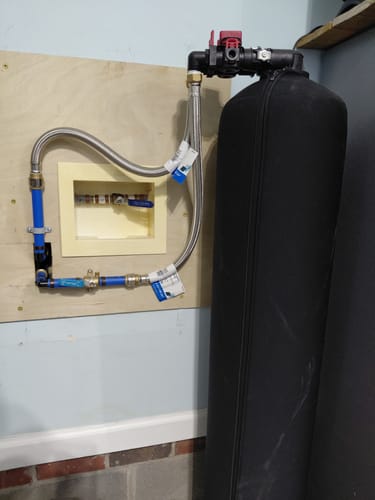
After proper flushing and system settling, I began systematic testing to evaluate actual performance against manufacturer claims and my specific expectations.
The chlorine removal was immediately apparent. The swimming pool smell disappeared completely from shower water. This was the most dramatic and instant improvement – noticeable from day one.
Taste testing showed significant improvement within 48 hours of full operation. The chemical aftertaste that had been present in our drinking water was gone. Coffee and tea preparation showed marked improvement in flavor clarity.
I conducted TDS (Total Dissolved Solids) testing before and after installation.
Pre-filtration readings averaged 285 ppm, while post-filtration readings dropped to 245 ppm. This represents removal of dissolved contaminants while maintaining beneficial minerals that reverse osmosis would eliminate.
Chloramine testing using pool test strips showed complete removal. Phoenix water typically contains 2-3 ppm chloramine, but post-filtration tests showed zero detectable levels consistently.
For fluoride testing, I used a digital meter capable of measuring low concentrations. Pre-filtration levels measured 0.8 ppm, while post-filtration readings consistently showed 0.2 ppm – roughly 75% reduction, which aligns with bone char's documented capabilities.
Flow rate testing during peak usage scenarios showed minimal pressure drop. Running our master bathroom shower (2.5 GPM), kitchen sink (1.8 GPM), and washing machine fill simultaneously still maintained adequate pressure throughout the house.
The system's backwash cycles occur automatically based on programmed parameters. In our household, this happens approximately every 8-10 days and uses about 85 gallons per cycle – a consideration for those on well water or water rationing.
Six Months Later: Long-Term Ownership Experience
The real test of any water treatment system is long-term performance and maintenance reality. After six months of daily use, here's what I've learned about living with this filtration system.
Performance has remained consistent throughout this period. Taste, odor, and chlorine removal continue at the same level as initial installation. No degradation in water quality has been noticeable.
The automated backwash system has operated flawlessly. I appreciate that it handles maintenance automatically – no manual intervention required. The system typically backwashes during early morning hours, so we rarely notice the process.
Maintenance has been minimal but important.
Monthly visual inspection of the bypass valve area for leaks, quarterly checks of the drain line for proper flow during backwash, and annual testing of water quality parameters.
One unexpected benefit: our water heater seems to be operating more efficiently. With chloramine removal, there's less corrosive chemical exposure to heating elements and tank surfaces. Our gas bills showed a modest but consistent decrease.
Soap and shampoo performance improved noticeably. Without chlorine and chloramine, soaps lather better and rinse cleaner. My wife particularly noticed the difference in hair texture and skin condition after showering.
The system's footprint became less noticeable over time. Initially, the tank seemed quite large in our garage space, but you quickly adjust to its presence. The occasional backwash sound is noticeable but not disruptive.
Cost analysis after six months shows the system paying for itself through elimination of bottled water purchases and reduced soap usage. We were spending approximately $40 monthly on bottled drinking water, which is now unnecessary.
Honest Assessment: What Works and What Doesn't
After six months of real-world use, I can provide an honest evaluation of this filtration system's strengths and limitations.
The system excels at its primary function: comprehensive chemical removal from municipal water supplies. Chlorine, chloramine, and fluoride reduction perform exactly as specified. For Phoenix water conditions, it addresses our main contamination concerns effectively.
Installation flexibility is both a strength and challenge. The system offers extensive programming options for different water conditions, but this complexity requires understanding your specific water chemistry and household usage patterns.
The upflow design and backwash capability are genuine advantages over simpler filtration systems.
Media bed efficiency remains high because the automatic cleaning prevents channeling and compaction that plague downflow-only filters.
However, the installation complexity shouldn't be underestimated. This isn't a simple filter replacement project. It requires plumbing modifications, electrical connections, and careful attention to initial system preparation.
Space requirements are significant. The 54-inch tank height and clearance needs for service access make this unsuitable for cramped mechanical rooms or areas with low ceilings.
The initial carbon fines issue was more extensive than expected. Even with careful flushing, it took several weeks to completely clear fine particles from all downstream fixtures and appliances.
Backwash water usage is substantial – 85 gallons every 8-10 days adds up to roughly 280 gallons monthly. For areas with water restrictions or high usage fees, this represents a notable operating cost.
The system doesn't address water hardness, iron, or sediment issues. In areas with these concerns, additional treatment would be necessary upstream or downstream of this carbon filtration system.
Who Should Consider This System and Why
After six months of ownership, I have clear recommendations about who would benefit most from this specific filtration approach.
This system is ideal for homeowners dealing with municipal water that contains chloramine rather than just chlorine.
Many basic carbon filters struggle with chloramine removal, making this specialized catalytic carbon approach particularly valuable.
Families concerned about fluoride exposure will appreciate the bone char component. If you prefer controlling fluoride intake rather than accepting whatever levels are present in municipal treatment, this addresses that concern effectively.
Households with members who have chemical sensitivities benefit significantly. The comprehensive removal of chlorine, chloramine, and various organic compounds creates noticeably cleaner water for drinking, cooking, and bathing.
DIY-capable homeowners with adequate space and installation skills will find good value in the system's long-term operating costs compared to replacement-cartridge systems.
However, this isn't the right choice for everyone. Renters or those in temporary housing shouldn't invest in whole house systems requiring permanent plumbing modifications.
Homes with significant hardness, iron, or sediment issues need pre-treatment before carbon filtration. This system doesn't address those problems and may actually be damaged by high iron or sediment levels.
Budget-conscious buyers might find better initial value in simpler systems, though long-term costs often favor comprehensive treatment over multiple smaller solutions.
Areas with excellent municipal water quality may not justify the investment. Testing your current water is essential before committing to any whole house treatment system.
Would I recommend this system? Absolutely, for the right situation. It addresses our Phoenix water challenges effectively, operates reliably, and provides the comprehensive chemical removal we wanted. The installation challenges and ongoing maintenance are manageable trade-offs for the water quality improvements we've experienced.