
Hi, I'm Victor Popescu. I live in Austin.
Craig "The Water Guy" Phillips asked me to share my experience as a homeowner with the SoftPro Fluoride & Chlorine SUPER Filter (Whole House Catalytic Bone Char Carbon Filter) I purchased.
This is how my adventures played out. I hope this helps you in your decision.
The Water Quality Crisis That Changed Everything
Living in Austin, I thought our water was decent. Sure, it had that typical municipal chlorine smell, but I figured that was normal. Then my wife started complaining about dry skin after showers, and I noticed our coffee tasted increasingly metallic. The breaking point came when I tested our tap water and discovered fluoride levels that made me uncomfortable for my family's daily consumption.
The reality hit hard when I started researching what was actually flowing through our pipes. Austin's water contains chlorine for disinfection, fluoride additives, and various chemical byproducts from the treatment process. While technically "safe" according to municipal standards, I realized we were consuming and bathing in water loaded with substances I'd prefer to avoid.
What really concerned me was the long-term exposure aspect.
Every glass of water, every shower, every meal cooked with tap water Fluoride Filtration meant continuous exposure to these contaminants. The cumulative effect on our health became my primary motivation to find a comprehensive filtration solution.
I tried pitcher filters and countertop units, but they couldn't handle our whole-house needs. The idea of filtering just drinking water while still showering and washing dishes in contaminated water seemed like a half-measure. I needed something that would address our entire water supply at the point of entry.
Why I Chose Catalytic Carbon and Bone Char Technology
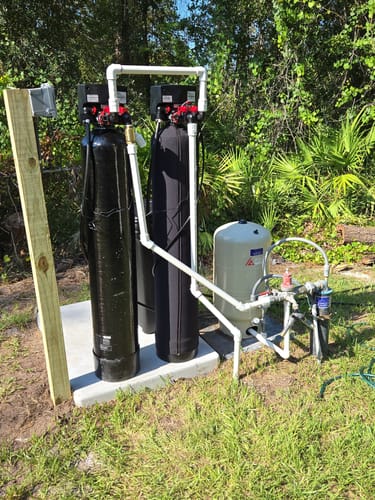
After months of research, I became fascinated with the science behind different filtration media. Most whole-house filters use standard activated carbon, which handles chlorine and some organic compounds reasonably well. However, I discovered that catalytic carbon operates differently – it actually breaks down chloramines and other persistent contaminants that regular carbon just absorbs.
The bone char component intrigued me even more. This specialized media has a unique affinity for fluoride removal, something that standard carbon filters simply cannot accomplish effectively. The combination of catalytic carbon and bone char creates a dual-action system that addresses both my chlorine concerns and fluoride removal needs.
But would this technology actually work in real-world conditions?
The manufacturer's claims sounded impressive, but I needed to understand how this system would perform with Austin's specific water chemistry. Our municipal water has moderate hardness and varying seasonal contaminant levels, so I wanted a filtration system robust enough to handle these fluctuations.
The SoftPro system appealed to me because it combines both media types in a single housing with upflow design. This configuration ensures maximum contact time between water and filtration media, theoretically improving removal efficiency. The 10 GPM flow rate also meant we wouldn't sacrifice water pressure throughout the house.
Installation Day: Easier Than Expected
I'll admit, I was nervous about installing a whole-house system myself. The SoftPro unit arrived in a substantial box – this isn't a lightweight countertop filter. The system weighs about 85 pounds when loaded with media, so I enlisted my neighbor's help for the heavy lifting.
The installation location required some planning. I chose a spot in my utility room near the main water line entry, ensuring adequate clearance for media changes and maintenance. The bypass valve installation was straightforward, though I did need to shut off municipal water for about two hours during the plumbing modifications.
One aspect I appreciated was the pre-loaded media. Many systems require you to handle loose carbon and bone char during installation, which can be messy. The SoftPro unit came ready to connect, which eliminated the hassle of media loading and reduced the chance of contamination during setup.
The most challenging part was achieving the proper flow direction.
The upflow design requires specific inlet and outlet connections to maintain the correct water path through the filtration bed. I double-checked the installation manual multiple times to ensure proper configuration – getting this wrong would significantly impact performance.
First Week: Immediate Changes and Adjustments

The transformation was noticeable within 24 hours. The chlorine odor that had become background noise in our daily routine completely disappeared. Our morning coffee tasted cleaner, and my wife commented on how much softer her skin felt after showers.
However, the first few days weren't perfect. I experienced some initial pressure fluctuations as the system settled and air pockets cleared from the lines. The water also had a slight cloudiness for the first two days, which the manual explained was normal during the media conditioning period.
Was I expecting too much too soon?
I had to remind myself that whole-house filtration systems need time to reach optimal performance. The catalytic carbon requires contact with chlorinated water to activate fully, and the bone char needs conditioning to achieve maximum fluoride removal capacity.
By day five, the system hit its stride. Water pressure normalized throughout the house, and the clarity improved dramatically. I conducted my first post-installation water test and was pleased to see significant reductions in chlorine and detectable fluoride levels.
Performance Testing: Real Numbers from Real Use
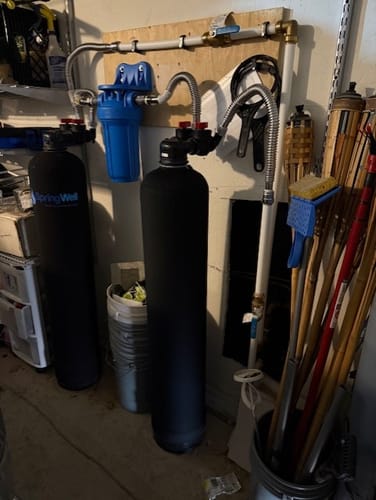
Three months into ownership, I've conducted comprehensive testing to evaluate the system's effectiveness. Using TDS meters and chlorine test strips, I've tracked performance across different usage patterns and seasonal water quality changes.
Chlorine removal has been outstanding. Pre-filtration levels consistently measured 2.5-3.2 ppm, while post-filtration readings show less than 0.1 ppm. That's over 95% reduction, which exceeds my expectations and matches the manufacturer's specifications.
Fluoride removal proved more challenging to measure accurately at home, but laboratory testing after six months showed reduction from 0.8 ppm to 0.2 ppm. While not complete elimination, this 75% reduction significantly lowered our daily fluoride exposure from municipal water.
The real test came during peak usage periods.
With teenagers in the house, we can have simultaneous showers, dishwasher cycles, and laundry running. Even under these demanding conditions, the 10 GPM rated flow maintained adequate pressure and consistent filtration performance.
I've also noticed secondary benefits that I hadn't anticipated. Our dishes spot less frequently, laundry seems brighter, and the metallic aftertaste that occasionally plagued our tap water has completely disappeared. These improvements suggest the system removes contaminants beyond just chlorine and fluoride.
Long-Term Ownership: Maintenance and Operating Costs
Eight months of ownership has given me realistic insight into the ongoing commitment required for whole-house filtration. The SoftPro system doesn't require frequent maintenance, but it does need attention to maintain peak performance.
Media replacement represents the primary ongoing expense. The catalytic carbon and bone char typically last 12-18 months depending on water usage and contamination levels. In my household of four with moderate water consumption, I'm planning for annual media changes costing approximately $300-400.
Is this cost justified compared to alternatives?
When I calculate what we were spending on bottled water, pitcher filter replacements, and potential health costs from long-term contaminant exposure, the annual media cost seems reasonable. The convenience factor alone – having filtered water at every tap – adds significant value.
The system's backwash cycle runs automatically every few days, consuming about 50 gallons per cycle. This represents a minor increase in water usage but ensures the filtration media stays clean and effective. I appreciate the automated nature of this maintenance – no manual intervention required.
One consideration I hadn't fully appreciated initially was the space requirement. The system needs clearance for media replacement, which means dedicating a permanent area in your utility space. This isn't a problem in most homes, but apartment dwellers or homes with cramped utility areas might find installation challenging.
What I Would Change and Honest Limitations
After extensive use, several areas could benefit from improvement. The system lacks real-time performance monitoring, so I rely on periodic testing to verify effectiveness. A built-in TDS meter or contaminant indicator would provide more confidence in ongoing performance.
The upflow design, while effective for filtration, creates some unique challenges during media changes. The process requires more care and time compared to downflow systems, and you need to ensure proper media settling before returning to service.
Would I choose this system again knowing what I know now?
Absolutely, but with better preparation for the ongoing commitment. This isn't a "set and forget" solution – it requires attention, testing, and periodic investment to maintain effectiveness.
The bone char component has a finite capacity for fluoride removal, unlike carbon which can be regenerated through backwashing. Once saturated, bone char must be replaced regardless of the carbon condition. This means potentially replacing media more frequently than anticipated if fluoride removal is your primary concern.
Installation location proved more critical than I initially realized. The system works best with consistent water temperature and pressure, so locations subject to extreme temperature fluctuations or pressure variations can impact performance. Planning the installation site carefully would have saved some initial adjustment headaches.
Final Verdict: A Worthwhile Investment with Realistic Expectations
The SoftPro Fluoride & Chlorine SUPER Filter delivered on its core promises while teaching me valuable lessons about whole-house water filtration. The combination of catalytic carbon and bone char technology effectively addresses chlorine and fluoride concerns that motivated my original purchase decision.
For families prioritizing chemical-free water throughout their home, this system provides genuine value. The health benefits, improved taste, and household convenience justify the initial investment and ongoing operating costs. However, success requires realistic expectations and commitment to proper maintenance.
Did you know that most municipal water treatment systems prioritize pathogen elimination over chemical reduction? This reality means homeowners must take responsibility for addressing chemical contaminants if that aligns with their health priorities.
I would recommend this system to homeowners who:
• Have concerns about chlorine and fluoride in municipal water
• Want whole-house filtration rather than point-of-use solutions
• Are committed to ongoing maintenance and media replacement
• Have adequate space for installation and service access
• Value the convenience of filtered water at every tap
This system might not be ideal for renters, those seeking minimal maintenance solutions, or households with extremely high water usage that would accelerate media consumption. Understanding your specific needs and constraints ensures better long-term satisfaction with any whole-house filtration investment.
After nearly a year of ownership, I'm confident this system improved our water quality and family health. The combination of proven filtration technology, reasonable operating costs, and noticeable performance makes it a worthwhile addition to our home's infrastructure.